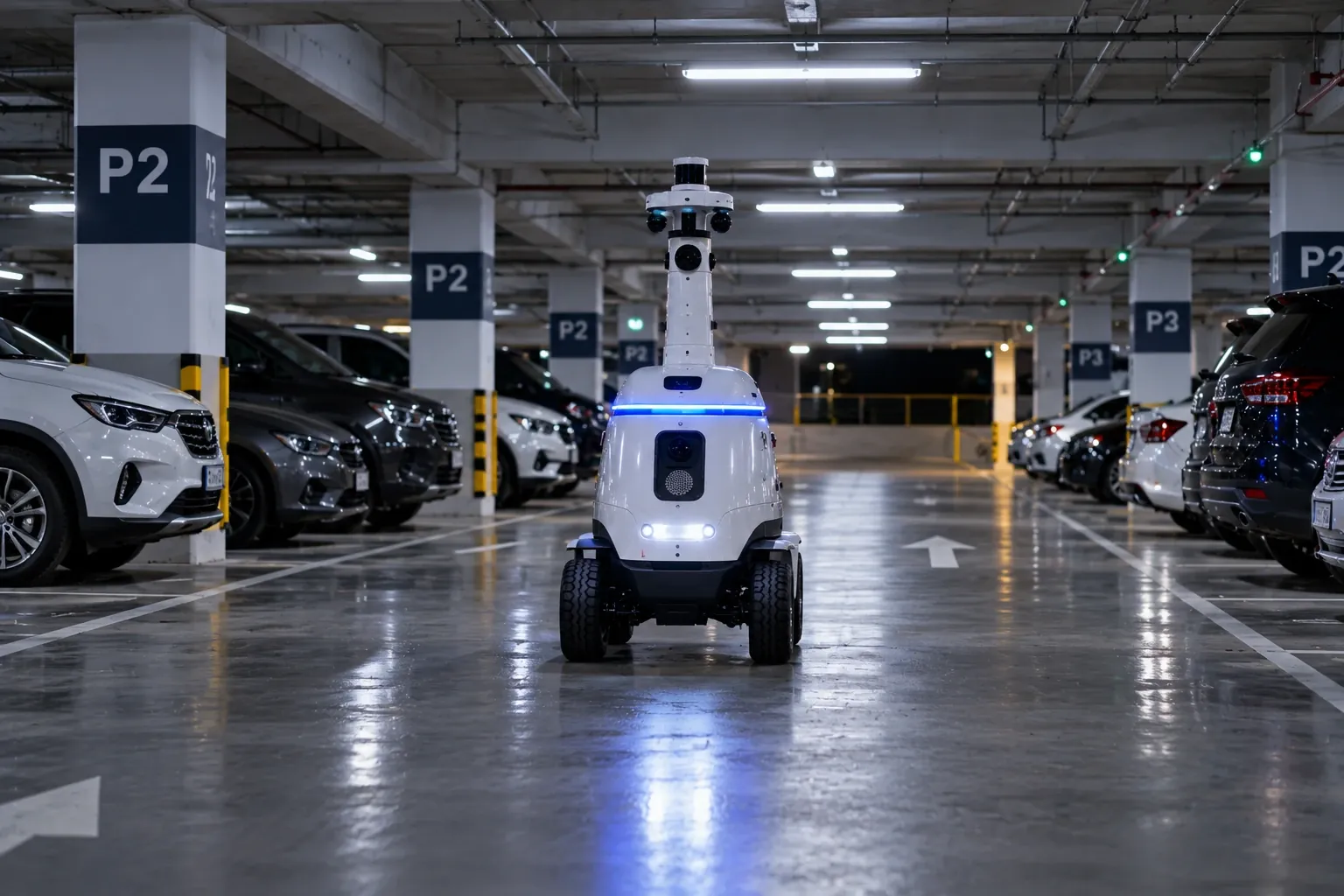
An autonomous security robot is a self-propelled mobile unit equipped with AI cameras, sensors, two-way audio, and real-time connectivity that patrols defined areas on programmed routes — detecting anomalies and streaming live data to a central monitoring center without requiring constant human direction.
Fixed cameras cover a fixed field of view — what happens outside the frame goes unseen. Autonomous robots patrol premises without human intervention, moving through a defined zone, changing angles, and detecting from multiple vantage points on every patrol cycle. Coverage follows the robot instead of ending at the lens.
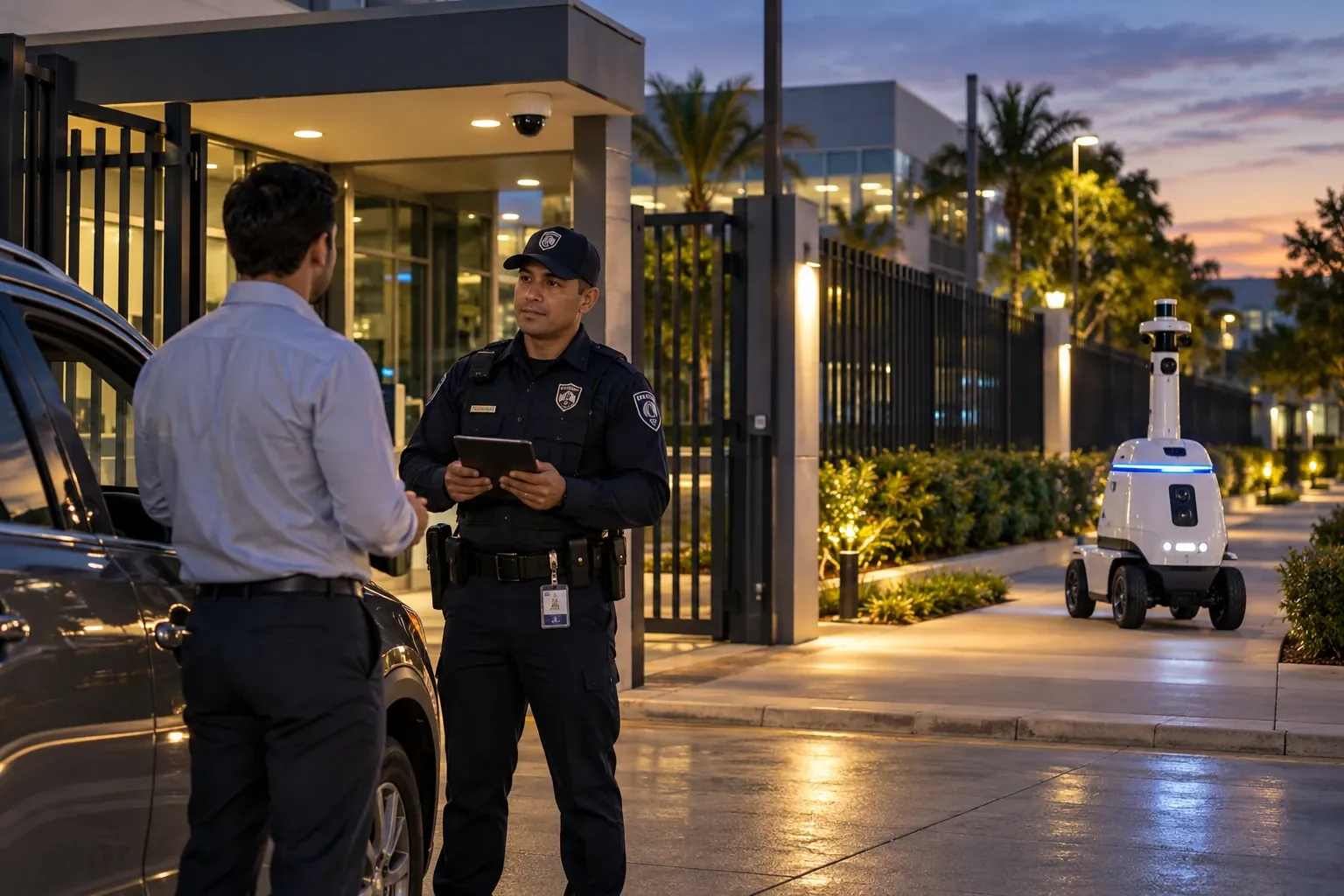
Guards make judgment calls, de-escalate human confrontations, and respond physically. Robots patrol continuously, detect with AI, and stream footage — without fatigue, distraction, or scheduling gaps. They are complementary: the robot handles perimeter surveillance while the guard handles human interaction.
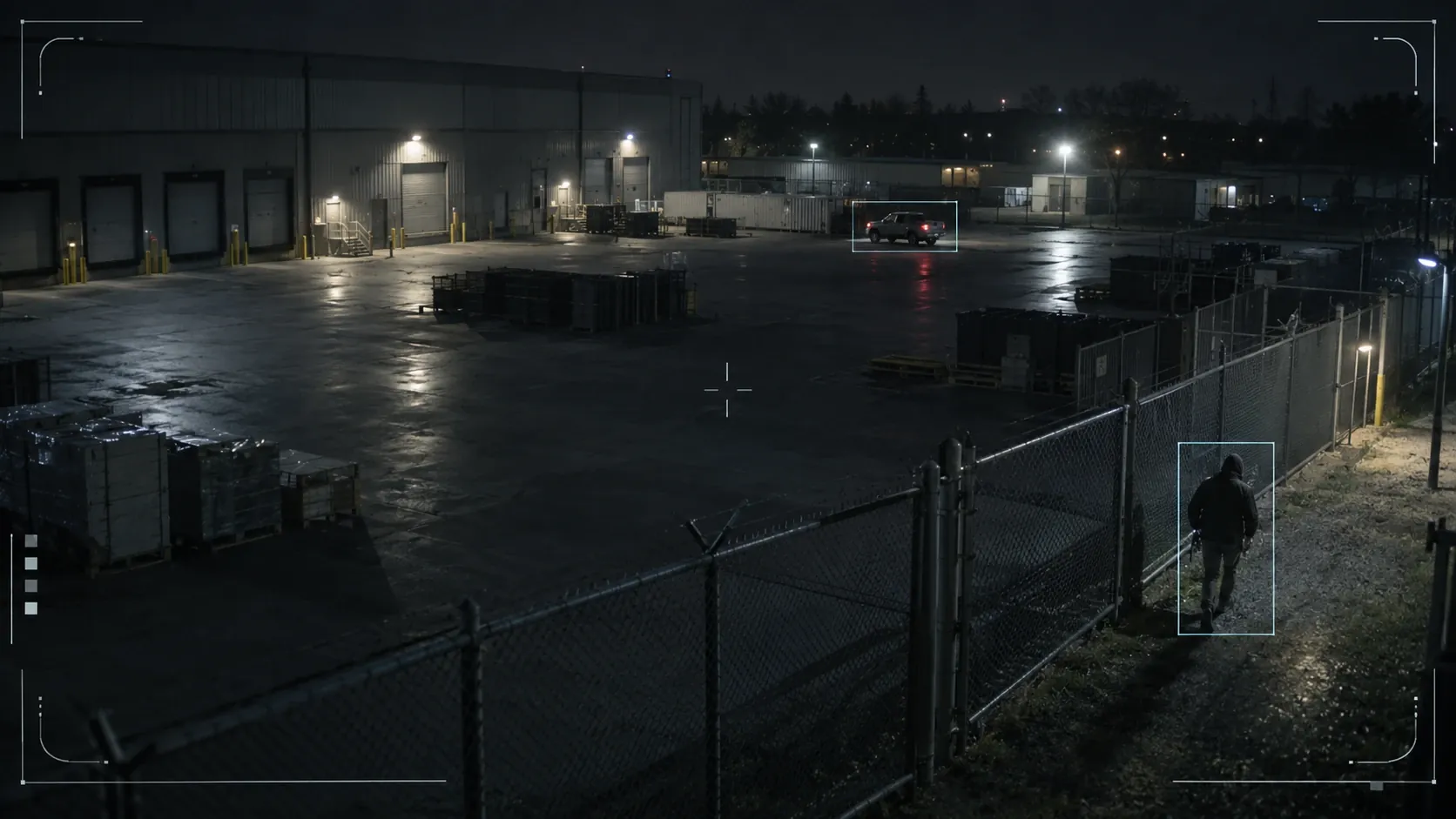
AI-powered devices detect suspicious behavior in monitored areas — the artificial intelligence security layer distinguishes humans from animals, flags loitering in restricted zones, identifies abandoned objects, and applies AI threat detection beyond simple motion triggers. The result: less alert noise, more real detections.
FPI's autonomous robot service is not hardware rental — it is a managed patrol program that includes deployment, configuration, SOC integration, and ongoing monitoring.
FPI deploys autonomous security devices in large facilities with patrol routes programmed to the property — covering high-risk zones, perimeter paths, parking areas, and blind spots on schedules that can be randomized to prevent predictable patterns.
The robot's AI layer analyzes its camera feeds in real time — detecting humans in restricted zones, vehicles in unauthorized areas, and behavioral anomalies that standard motion sensors miss. Every detection generates an alert to the FPI Security Operations Center.
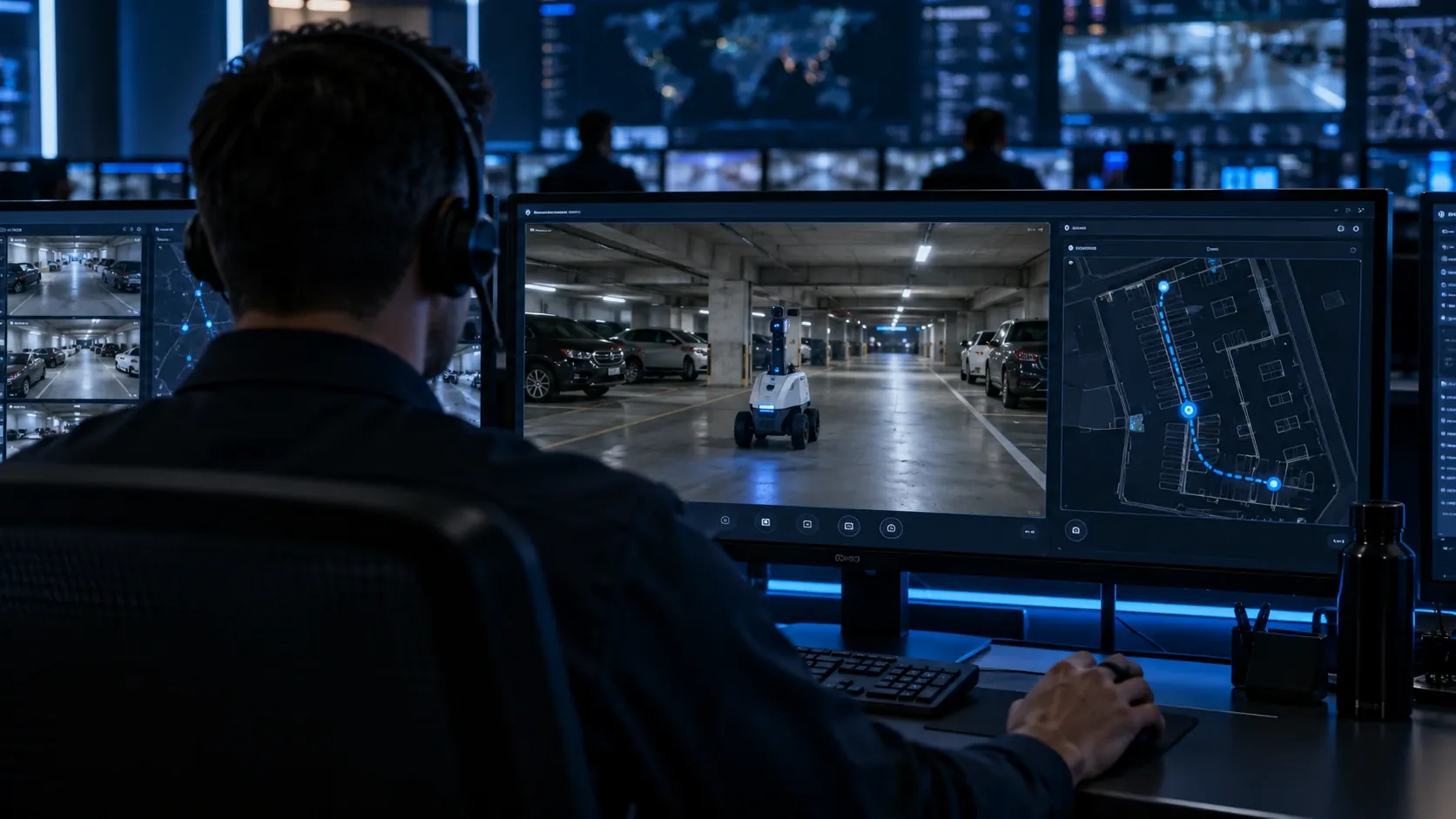
Autonomous security units stream live video to monitoring centers — every frame the robot captures flows into FPI's Security Operations Center (SOC), where trained operators watch, verify, and respond through our remote monitoring operation. The robot detects; the human decides.
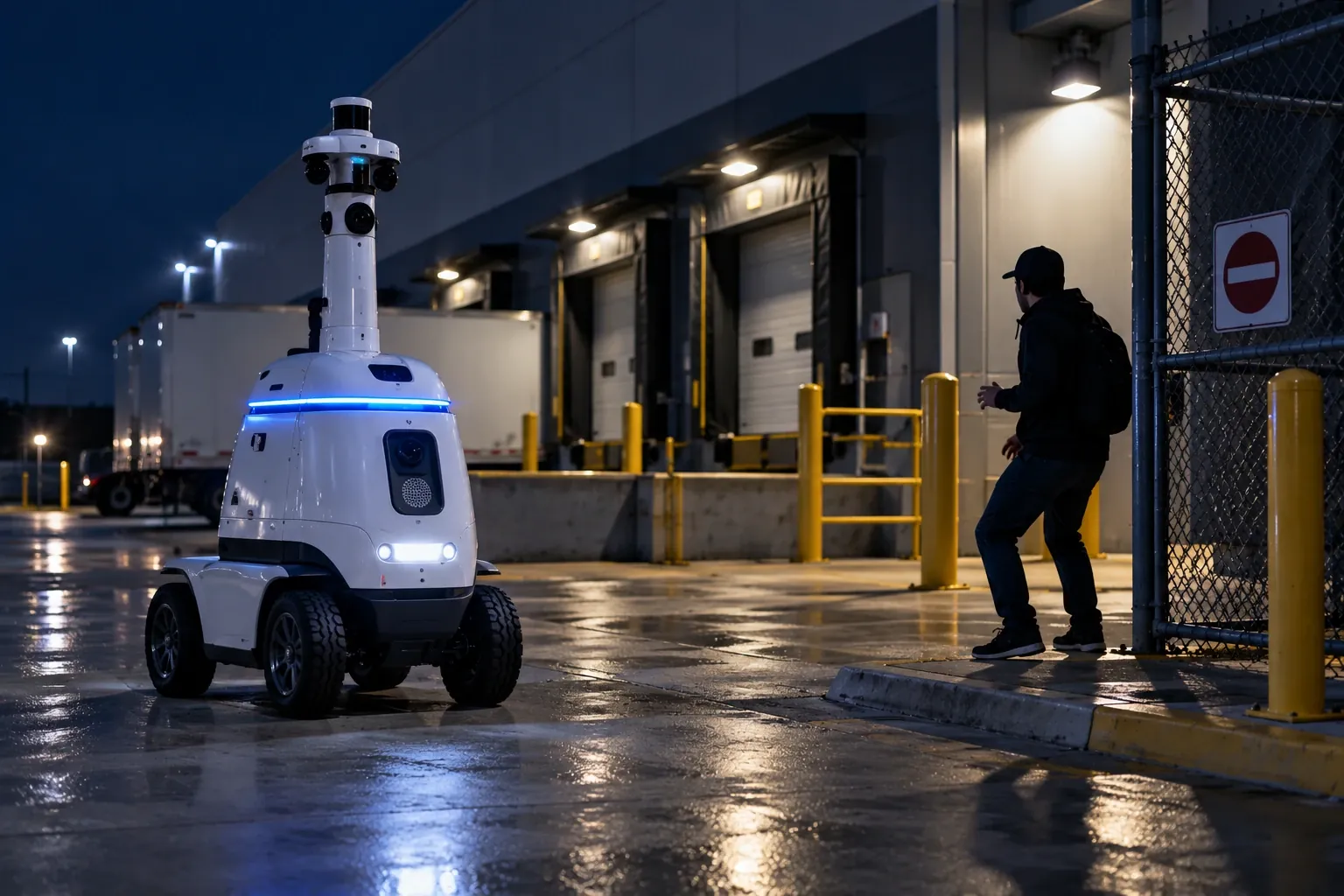
The robot's onboard speaker lets SOC operators issue real-time verbal warnings to individuals in restricted areas — deterring incidents without physical intervention. Most unauthorized-presence situations end with a verbal warning, before any escalation.
FPI integrates autonomous devices with surveillance systems: robot footage feeds the same platform as fixed cameras and patrol GPS logs — one unified security picture instead of another siloed feed.
Robot patrol logs, AI detection events, and incident footage are all in the FPI client portal — from any device, 24/7. An Operations Director reviews last night's coverage before the morning standup, without a single vendor call.
FPI deployed ROSA at Florida Gun Center in Hialeah — a high-traffic firearms retailer managing a large inventory across an active shopping plaza. Unauthorized individuals were repeatedly accessing the property after hours and stealing water. Within days of deployment, ROSA stopped it.
Adding a security guard adds salary, benefits, scheduling overhead, and training costs — adding an autonomous robot adds coverage at a fraction of that cost. Autonomous patrol devices reduce operational costs for large properties.
A guard post costs more than the hourly rate: annual salary plus benefits, overtime, scheduling gaps, training, and turnover all accumulate over a 12-month contract. Meanwhile, the insurance math still applies — Florida businesses without adequate security pay 30–40% higher premiums (TechPro Security, 2025), so under-covering is its own cost.
A robot patrols continuously without breaks, shift changes, or fatigue — holding a consistent pace across a large parking lot or campus perimeter. Those are exactly the zones that go underserved when guard staffing is at minimum.
The most effective deployment pairs the robot with on-site security guards: the human handles access points, visitor interaction, and incident response while the robot patrols the perimeter, parking areas, and secondary zones simultaneously. One guard plus one robot covers ground that would otherwise take three posts.
FPI's autonomous robot service operates as a managed program — not a hardware deployment. From site assessment to active patrol, every step is handled by FPI.
FPI maps the property — high-risk zones, blind spots, and optimal patrol paths. The robot's patrol program is designed around the actual vulnerability profile of the site, not a default factory setting.
FPI deploys the robot, programs the routes, and integrates the unit's live feeds into the Security Operations Center. The client receives portal access before the first patrol runs.
The robot patrols continuously while remote monitoring centers track surveillance feeds in real time — reviewing AI alerts and responding to verified detections as they happen.
FPI reviews patrol data and detection patterns monthly — adjusting routes, timing, and sensitivity thresholds based on real incident data. Monthly reports arrive through the client portal.
Autonomous security robots deliver maximum ROI in large, open, or under-staffed coverage zones where adding human guards would be cost-prohibitive.
Multiple buildings, parking structures, and outdoor zones — the robot patrols between fixed guard posts, covering the gaps in human coverage efficiently across the whole campus.
Parking areas are among the highest-risk zones for vehicle theft, vandalism, and personal safety incidents — and among the hardest to staff cost-effectively. A robot patrols the full structure continuously, level by level.
FPI deploys autonomous security robots for campuses and industrial sites across our markets. With California, Florida, and Texas accounting for 54% of U.S. cargo theft and the average incident costing $202,000 (NICB, 2025), continuous perimeter patrol between guard posts is a high-return layer for warehouse and industrial properties.
After hours, retail risk concentrates in parking lots, loading docks, and service entrances. The robot patrols those zones continuously overnight, when staffing is at its minimum and incidents cluster.
Robot patrol supplements overnight guard coverage in gated communities — covering amenity areas, parking lots, and perimeter zones that a single overnight guard cannot monitor simultaneously.
Robots deploy rapidly to active construction sites — patrolling equipment yards and material storage areas through the overnight and weekend windows when sites are most vulnerable.
Most autonomous security robot providers deliver hardware — FPI delivers a managed security program where the robot is one component of an integrated protection system.
FPI owns the deployment, configuration, monitoring, and maintenance of the robot. You get a managed security program — not a piece of hardware to figure out. One service agreement, one point of contact.
The robot's AI flags anomalies; a live SOC operator reviews the footage and decides the response. No automated police dispatch without human verification — judgment stays in the loop on every alert.
The FPI client portal shows robot patrol logs, guard GPS data, fixed camera feeds, and incident reports in one unified dashboard. The Operations Director sees the full security picture — not siloed reports from separate vendors.
FPI manages robot deployments across multiple properties under one service agreement with centralized reporting. One location or ten, the platform scales without changing providers.
FPI offers a no-cost autonomous security assessment — patrol zone mapping, coverage gap analysis, and a site-specific recommendation comparing your current coverage model to a robot deployment. Available for commercial properties across Florida and Texas.