Commercial surveillance systems have evolved from analog recording devices into AI-powered, networked platforms that prevent incidents rather than document them.
The trajectory is clear: analog CCTV gave way to IP cameras, IP cameras connected to the cloud, and cloud-connected systems now run AI video analytics. Each generation moved the camera further from "a recording device" and closer to "a detection system" — and the businesses still running the first generation are protected by the standards of twenty years ago.
Cameras matter for four reasons that go beyond recording: prevention (visible coverage deters), documentation (surveillance systems provide video evidence after incidents), liability (footage resolves disputes), and insurance (active security reduces property crimes 16% compared to gate-only setups — TechPro Security, 2025).
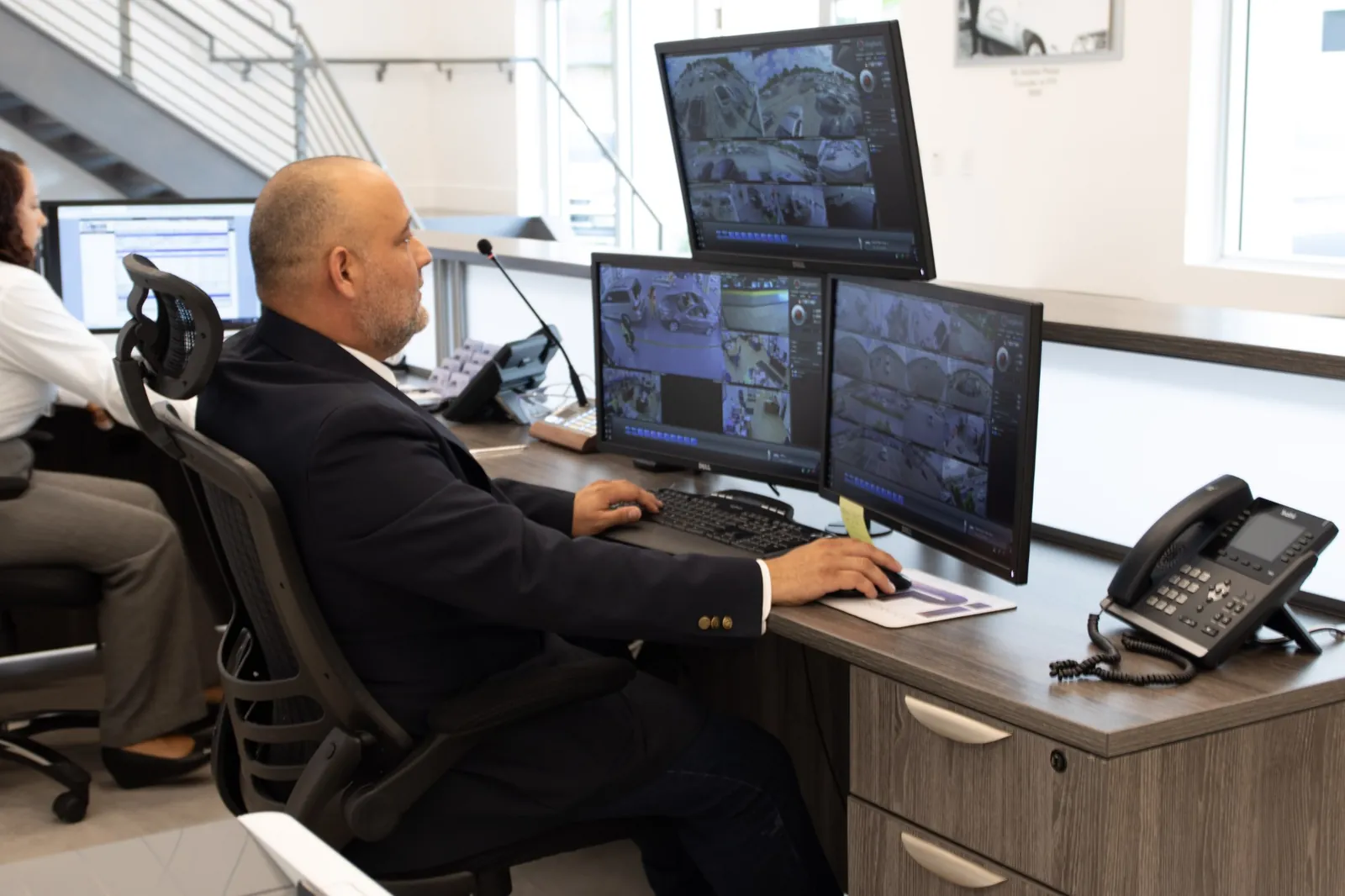
A camera that records without anyone watching is a documentation tool — not a security system. This is the problem FPI builds every deployment to solve.
Recorded footage documents crime after it happens. Without live monitoring or AI detection, the camera's only job is confirming what was lost — after it is gone. Pairing hardware with remote video monitoring is what turns a recording system into a prevention system.
Camera placement, resolution selection, blind spot analysis, and monitoring configuration are the gap most DIY and low-cost installations leave open. A well-specified camera pointed at the wrong zone — or recording at a resolution that can't identify a face — provides the feeling of security without the function.
The average cargo theft incident costs $202,000 (NICB, 2025) — one unmonitored overnight event at a warehouse can exceed a decade of surveillance investment. And the exposure compounds: Florida businesses without adequate security pay 30–40% higher insurance premiums (TechPro Security, 2025).
Consumer IP (Internet Protocol — digital, network-connected) cameras lack commercial resolution, weatherproofing, storage redundancy, and integration with alarm or access control systems. They are built for doorbells and driveways, not evidence-grade coverage of a commercial property.
A commercial surveillance system is a networked infrastructure of cameras, recorders, management software, and — critically — monitoring, working together to detect, document, and deter threats in real time.
Every commercial system is built from six layers. Cameras capture the property; surveillance systems record activity across all access points. An NVR or DVR stores the footage. Video management software organizes and searches it. Storage — local plus cloud — retains it. Network infrastructure carries it. And the monitoring layer, human or AI, is what turns all of the above into response.
IP cameras transmit digital video over a network — enabling remote access, higher resolution, and AI integration. Traditional CCTV (closed-circuit television) is analog: video travels over coaxial cable to a local recorder, on a closed loop that cannot scale or be accessed remotely.
Resolution determines whether footage is evidence-grade or just a blurry record of an event. 1080p (Full HD) identifies faces and plates at close range; 4K holds identification detail across wide areas where digital zoom is needed. The wrong resolution choice is only discovered when the footage is needed — and fails.
On-premise systems store to a local NVR: no internet dependency, no subscription, but physically vulnerable. Cloud systems offer remote access and redundant backup on a subscription model. Hybrid deployments — local recording with encrypted cloud sync — capture the strengths of both, and are FPI's standard recommendation.
The chain runs: camera captures → signal transmits over the network → NVR records → VMS manages and raises alerts → an operator (human or AI) reviews → the incident is documented or escalated. A weakness at any link — a misaimed camera, full storage, an unwatched alert — breaks the whole chain.
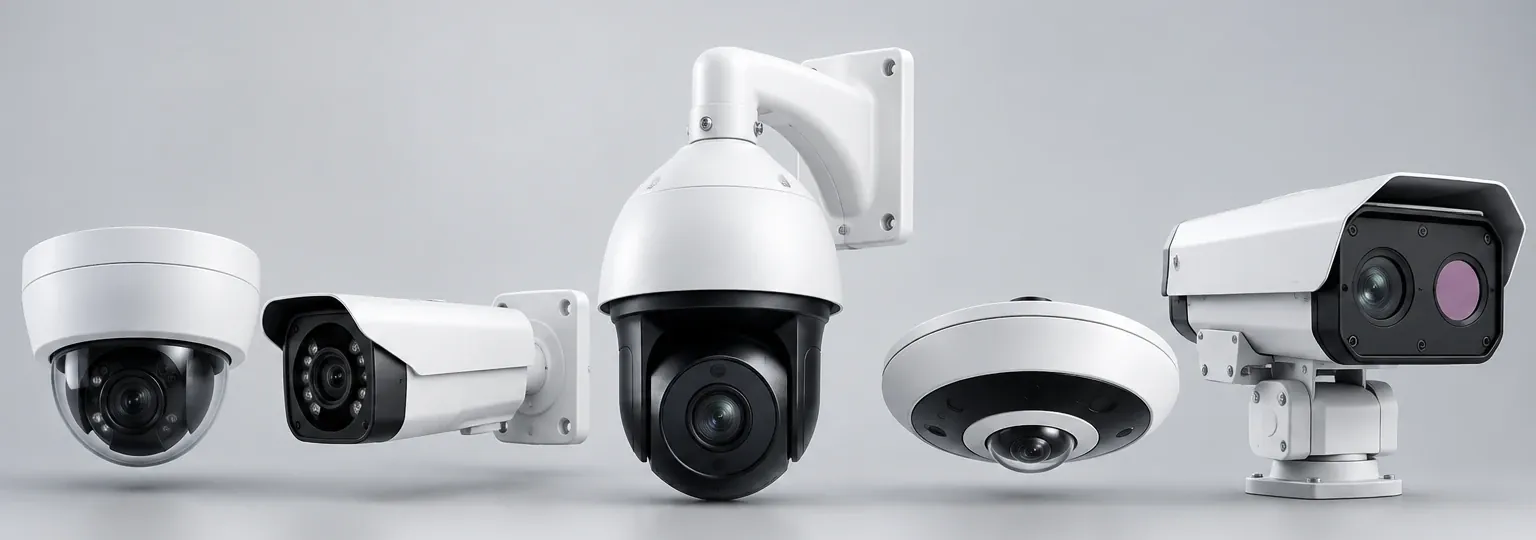
The right camera type depends on the coverage zone, lighting conditions, indoor/outdoor environment, and whether active tracking is needed. Each type below is a distinct deployment scenario.
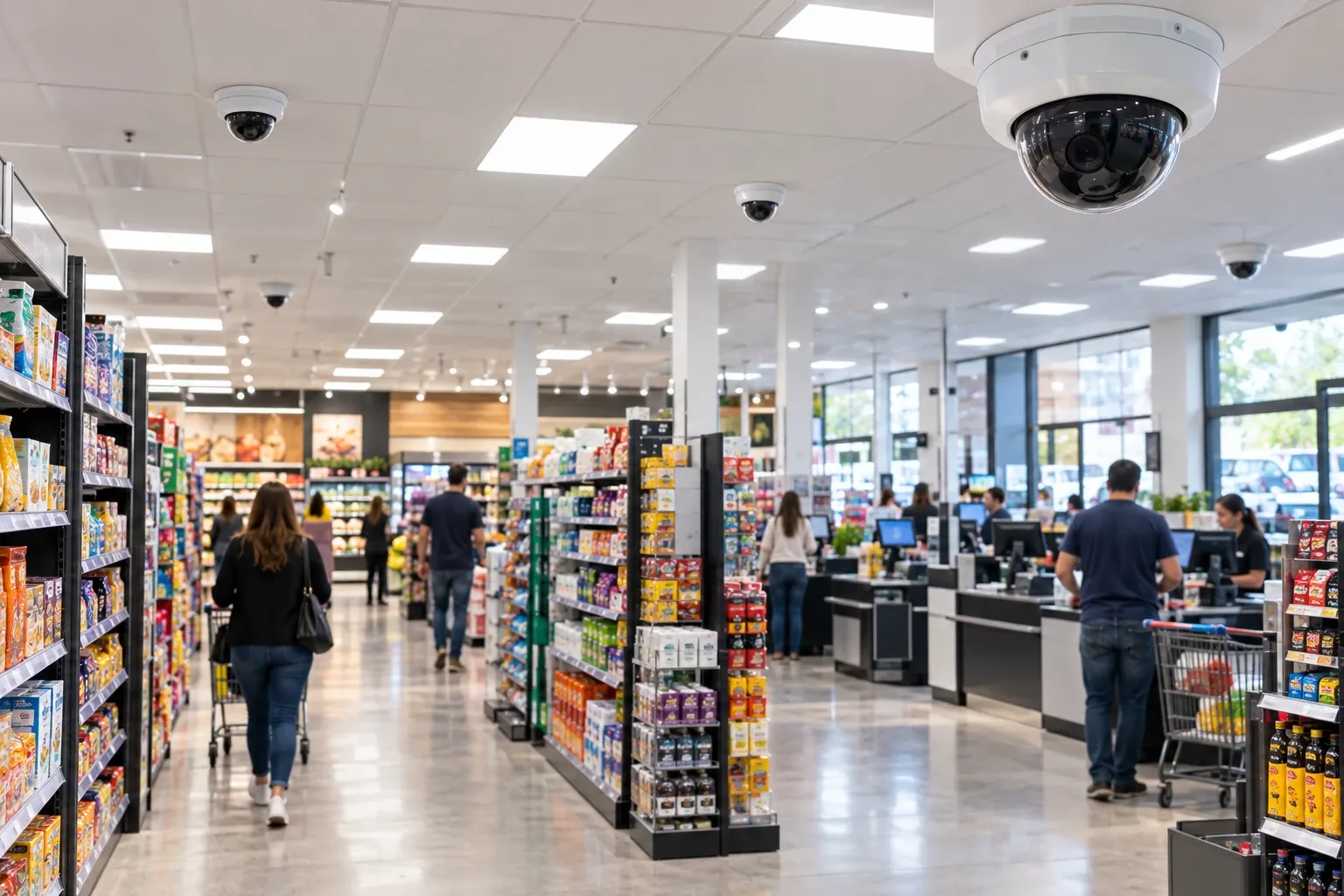
Ceiling-mounted, wide-angle, vandal-resistant. Dome cameras cover retail floors, office lobbies, and corridors without dominating the space — and their housing conceals which way the lens points.
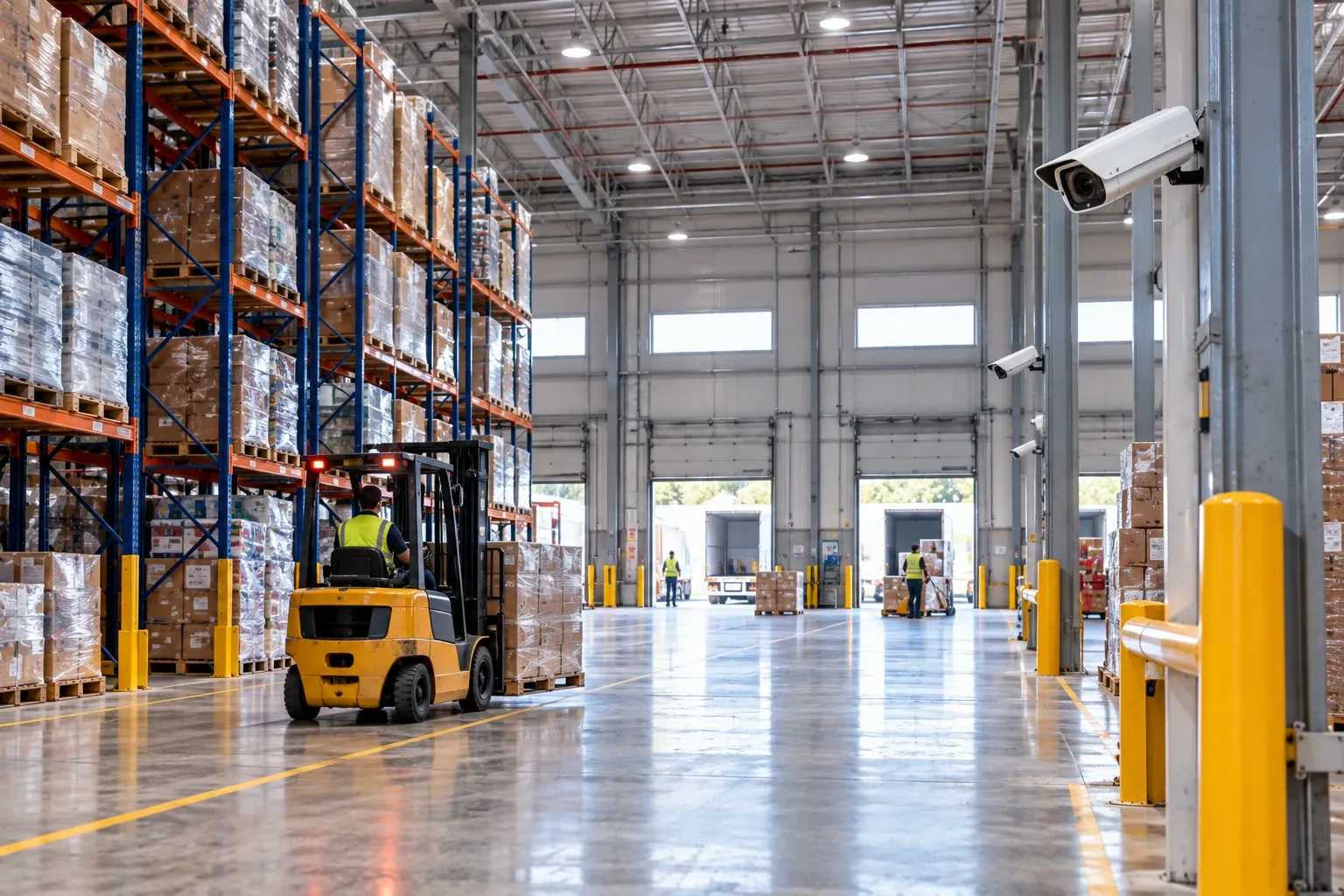
Cylindrical, long-focal-length, weatherproof. Bullet cameras watch parking lots, building perimeters, and gates — and their visible profile is itself a deterrent.
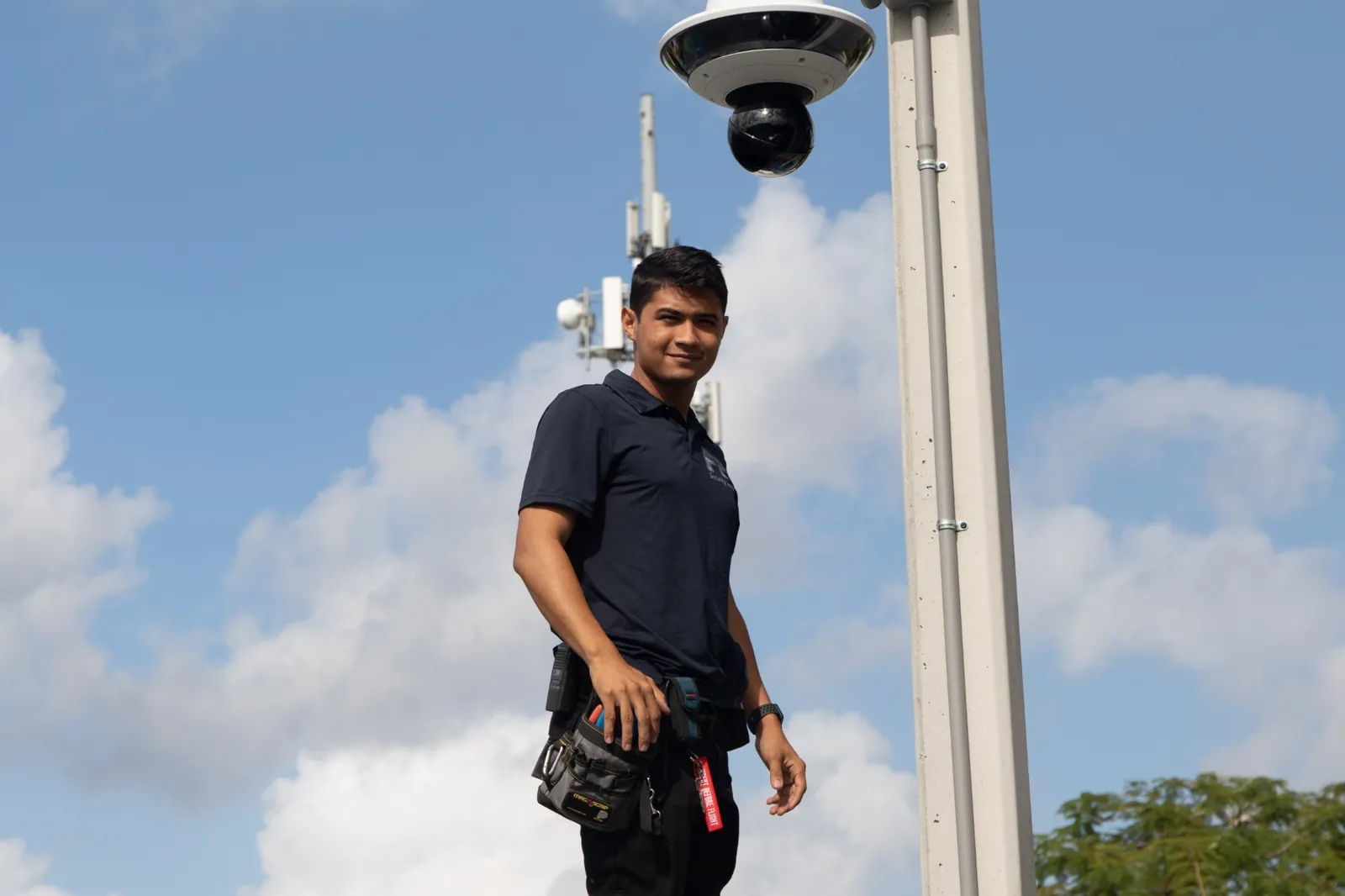
PTZ (pan-tilt-zoom) cameras actively track movement across wide areas — operators or AI control the view in real time. Ideal for large lots, campuses, and venues where one camera must do the work of several fixed views.
One unit covers an entire open space — warehouse floors, open-plan offices, retail floors — with dewarping software rendering usable, evidence-ready footage from the fisheye image. Fewer cameras, no blind seams between views.
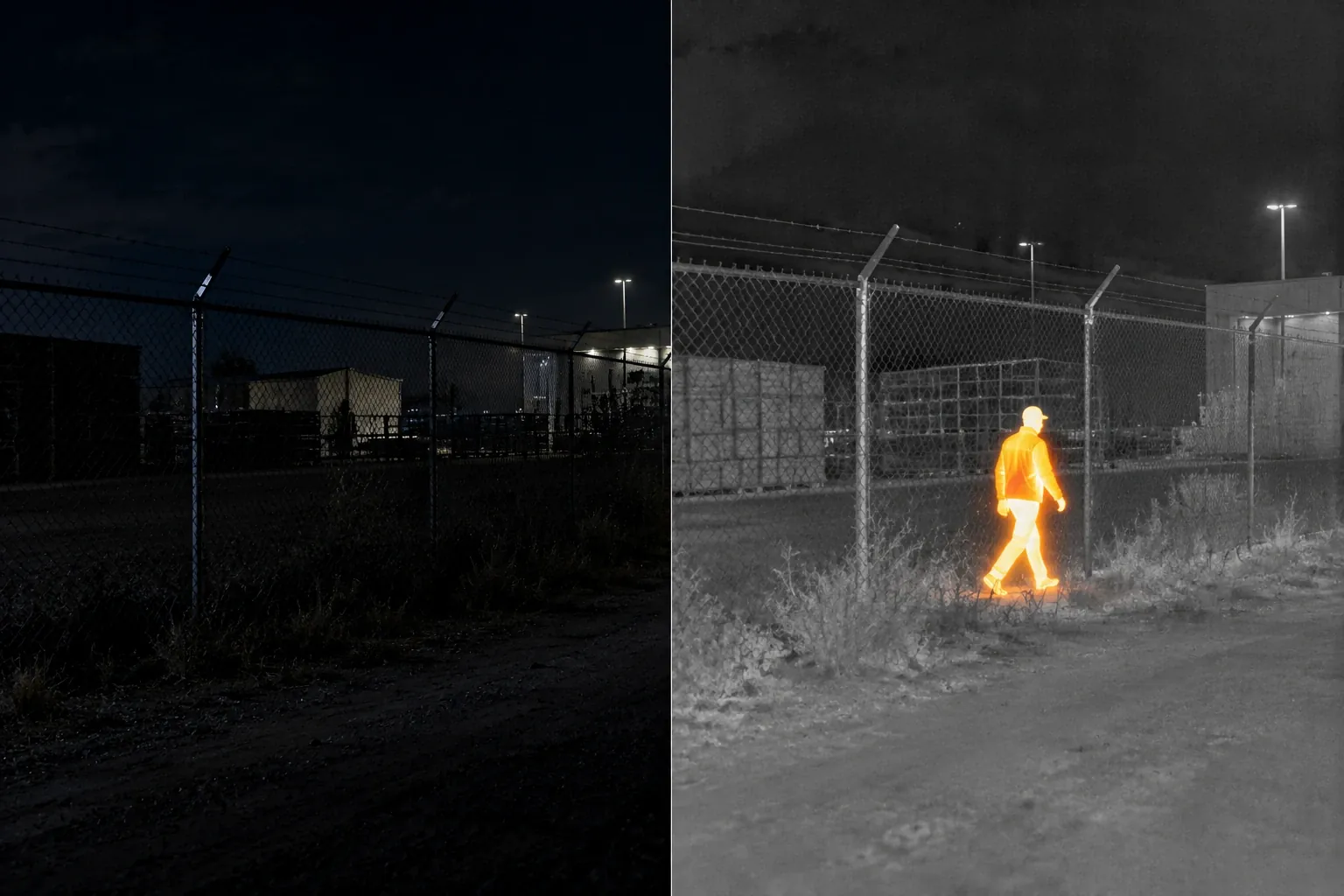
Thermal cameras detect intruders in complete darkness and adverse weather — reading heat signatures instead of visible light, they work through smoke, fog, and zero-light conditions. Critical for industrial perimeters and remote sites.
IP camera networks scale across multiple locations from a single dashboard — transmitting over existing network infrastructure with remote management and AI integration built in. The commercial standard for any new deployment.
High-definition cameras cover blind spots in large facilities, and HD is the threshold for usable evidence in police investigations and insurance claims. 1080p at minimum; 4K where wide zones demand zoom-in identification.
IP66-rated housings are dust-tight and protected against water jets; IP67 adds submersion resistance. Choosing the wrong rating for an outdoor installation guarantees eventual hardware failure — and a coverage gap you discover after the fact.
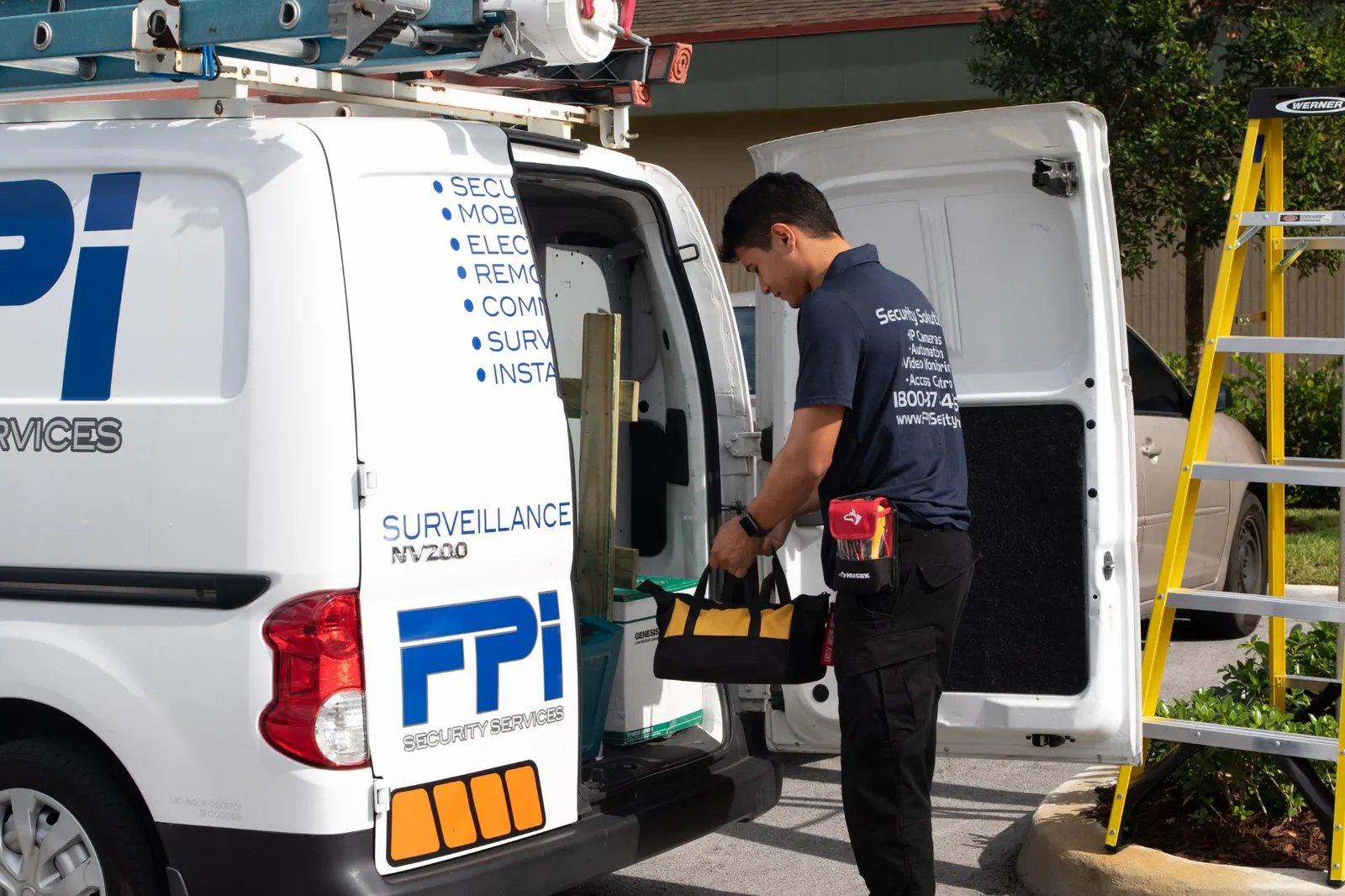
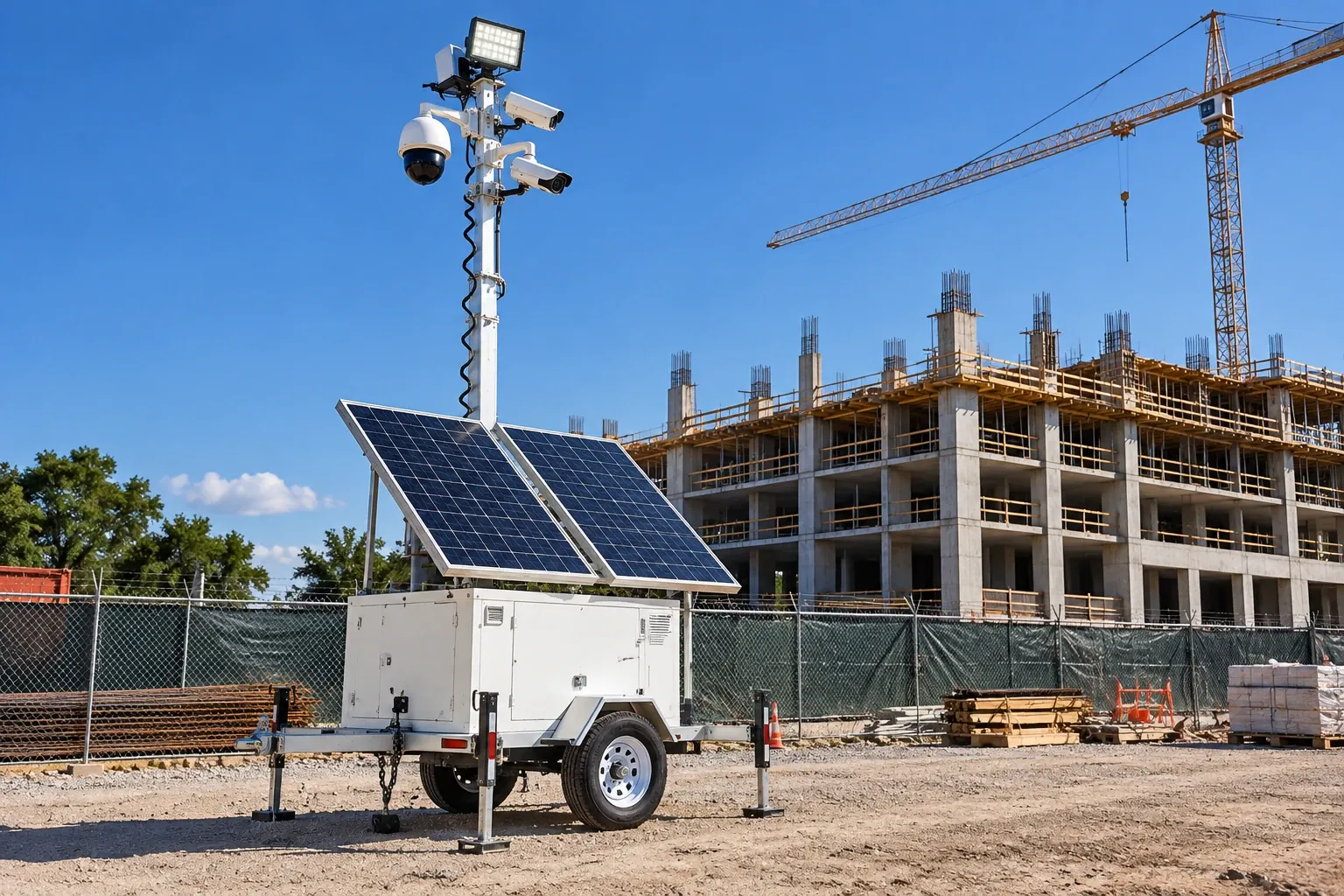
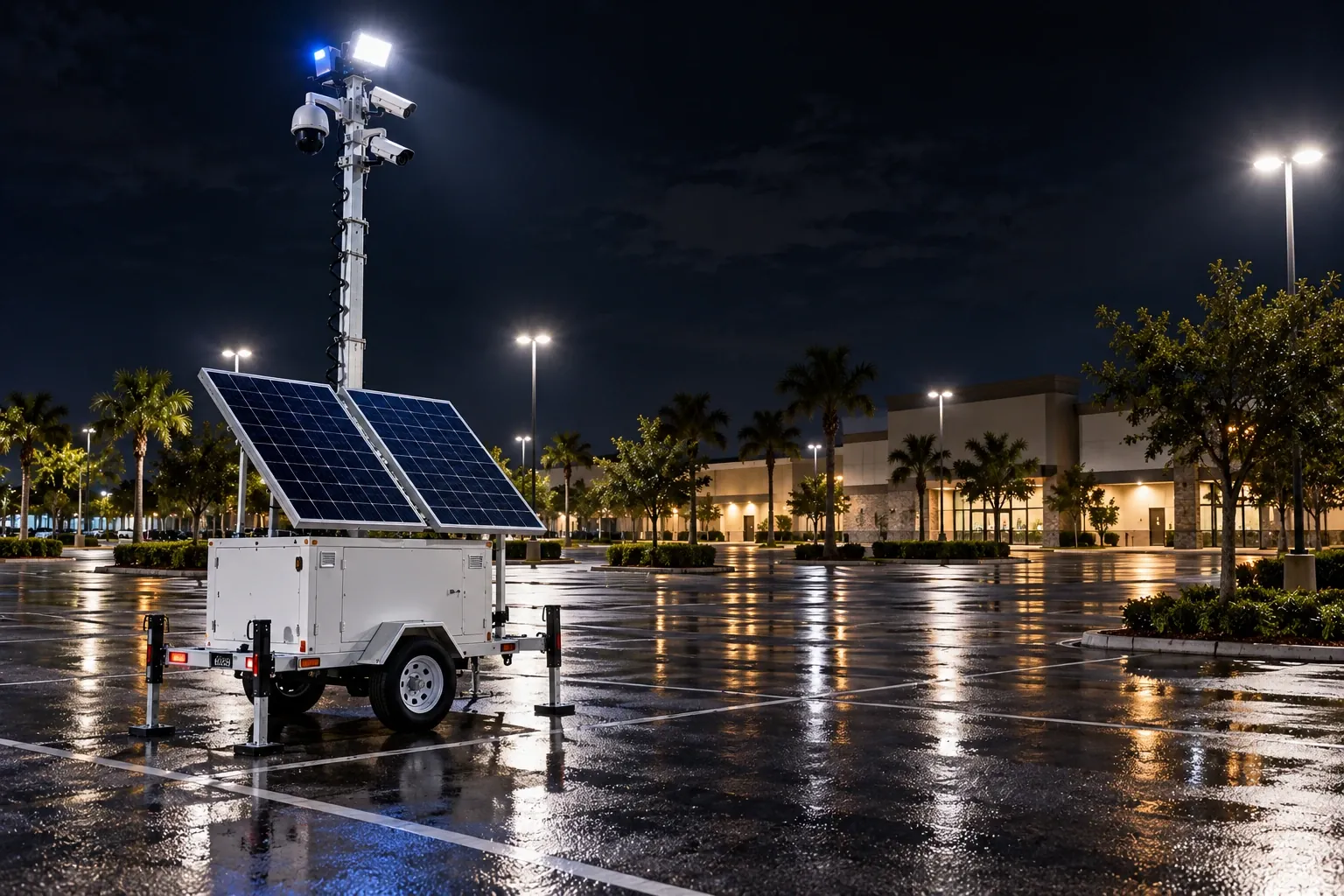
FPI deploys mobile surveillance trailers for construction and remote sites: self-contained units with solar power, cellular connectivity, and onboard recording — operational within 24–48 hours, no infrastructure required. This is the hardware differentiator camera-only vendors don't offer.
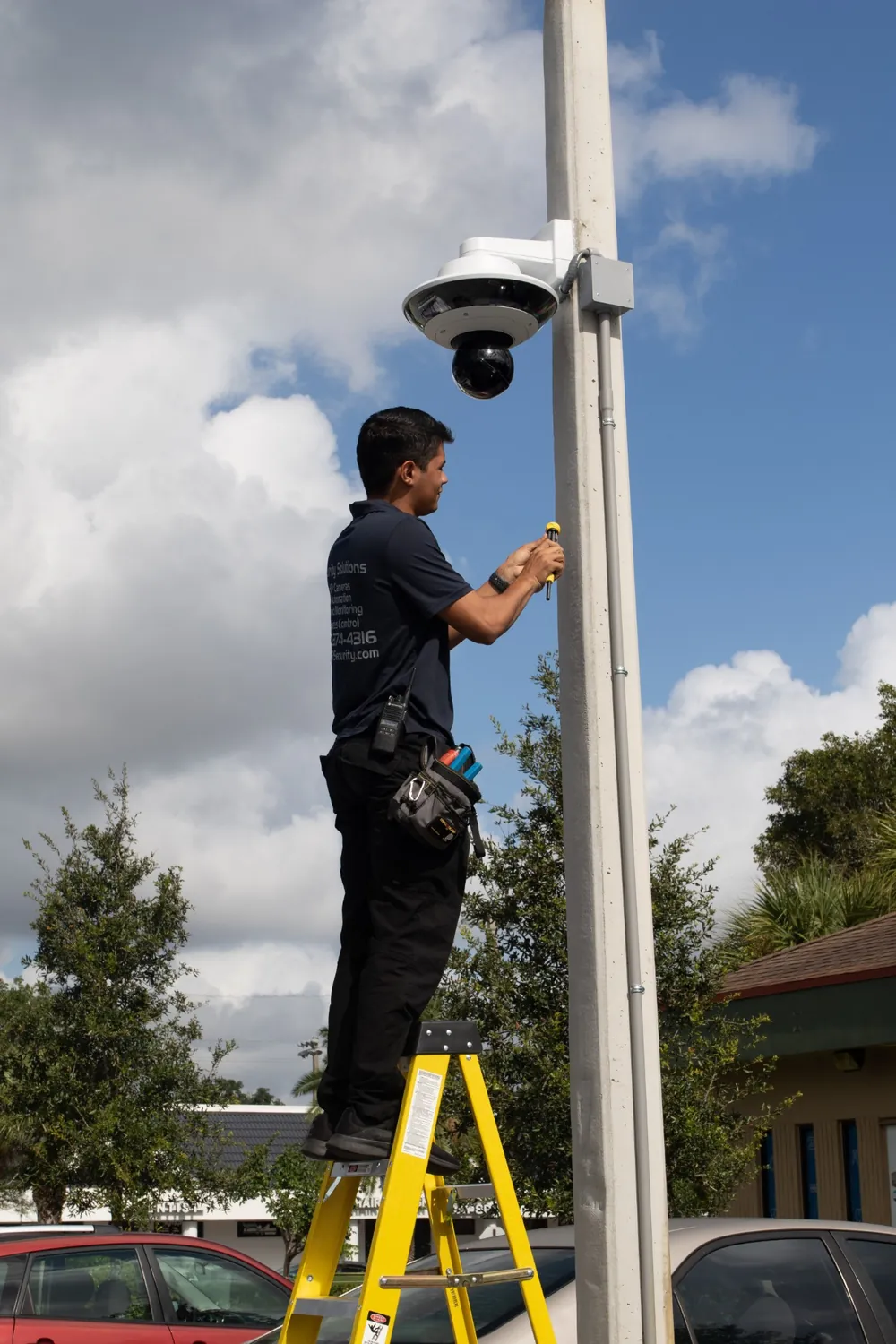
FPI manages every phase of surveillance deployment — from vulnerability assessment through installation, monitoring integration, and ongoing maintenance. FPI installs surveillance systems for businesses in every state we serve.
The workflow: site vulnerability walk → camera placement design → hardware procurement → installation → network configuration → testing → go-live. Every step is FPI's responsibility, so there is no gap between what was designed and what was installed — and no finger-pointing between vendors when something needs attention.
FPI handles CCTV installation for multi-zone commercial properties — office buildings, warehouses, retail centers, and industrial campuses — engineering camera counts, sightlines, and cable paths around how the property actually operates.
Cameras without monitoring are documentation tools. FPI pairs surveillance hardware with live operator coverage, so CCTV cameras monitor facilities in real time — with audio warnings and video-verified dispatch behind them. See remote video monitoring.
Beyond installation sits the operational layer: system health monitoring, alert configuration, operator review protocols, and escalation procedures — managed continuously so the system you bought keeps doing the job you bought it for.
FPI manages ongoing surveillance system maintenance across all our markets: firmware updates, camera health checks, storage verification, lens cleaning, and remote diagnostics. See maintenance plans for the full scope.
Many commercial properties run analog CCTV systems installed 10–15 years ago. FPI integrates new IP cameras with legacy infrastructure where possible — and designs phased migration plans where it is not, so coverage never lapses mid-upgrade.
FPI deploys, configures, monitors, and retrieves mobile surveillance trailers — clients never manage the hardware. When the project ends or the event closes, the trailer leaves with us, and coverage moves wherever it's needed next.
FPI deploys surveillance systems across the highest-risk commercial environments in every market we serve — each industry with a distinct camera and monitoring strategy.
Dome cameras for floor coverage, PTZ for parking, AI analytics for loitering detection. The outcome is measurable: reduced shrinkage, documented incidents, and staff accountability at the register and the stockroom door.
Mobile trailers are the primary solution: no infrastructure, solar-powered, and rapidly repositioned as the site evolves from groundwork to build-out. Coverage arrives days after the order — not after the trenching, permitting, and utility work a fixed system would need.
California, Florida, and Texas account for 54% of all U.S. cargo theft (NICB, 2025). FPI specifies perimeter bullet cameras, interior fisheye coverage, and overnight thermal — with high-definition cameras covering blind spots and footage doubling as safety-compliance documentation.
Lobby domes, stairwell coverage, parking structure bullets, and access control integration — with tenant-safety documentation flowing into property management reporting.
Patient area monitoring, restricted-zone coverage, and access control integration for medication rooms — configured with recording and retention settings that respect HIPAA (the federal patient-privacy law governing healthcare data).
POS-area coverage for loss prevention, dining area monitoring for customer safety incidents, and back-of-house accountability — with retention configured for the insurance claims hospitality operators actually face.
Miami-Dade County projects $69.3 million in vehicle theft costs in 2025 (CrimeGrade, 2025). FPI deploys surveillance technology for dealerships across our markets: PTZ for active lot tracking, LPR for entry/exit logging, and thermal for overnight coverage of open-air inventory.
Perimeter coverage, entrance monitoring, parking lot surveillance, and emergency lockdown camera integration — supporting student safety programs and integrating with visitor management at the front door.
The broadest trailer use case: oil and gas sites, outdoor events, vacant properties, disaster recovery. Cellular connectivity and solar power make sites viable that have no infrastructure at all — monitored from day one.
FPI deploys purpose-built commercial surveillance technology — not consumer-grade cameras rebranded for business use.
In the technology stack, thermal is the detection layer: heat signatures instead of visible light, unaffected by darkness, glare, dust, or fog. Deployed on oil and gas sites, industrial perimeters, and construction yards.
Infrared illuminators enable HD footage in complete darkness without visible light — the difference between "something moved" and an identifiable face on overnight parking lot, perimeter, and construction site coverage.
AI-powered video analytics detect anomalies beyond simple motion triggers: distinguishing humans from animals, detecting loitering, flagging abandoned objects, and cutting false alert noise so real events get real attention.
LPR (license plate recognition, also called ANPR — automatic number plate recognition) cameras document every vehicle entering a facility, logging plate data at entry and exit points. Essential for dealerships, warehouses, and gated facilities.
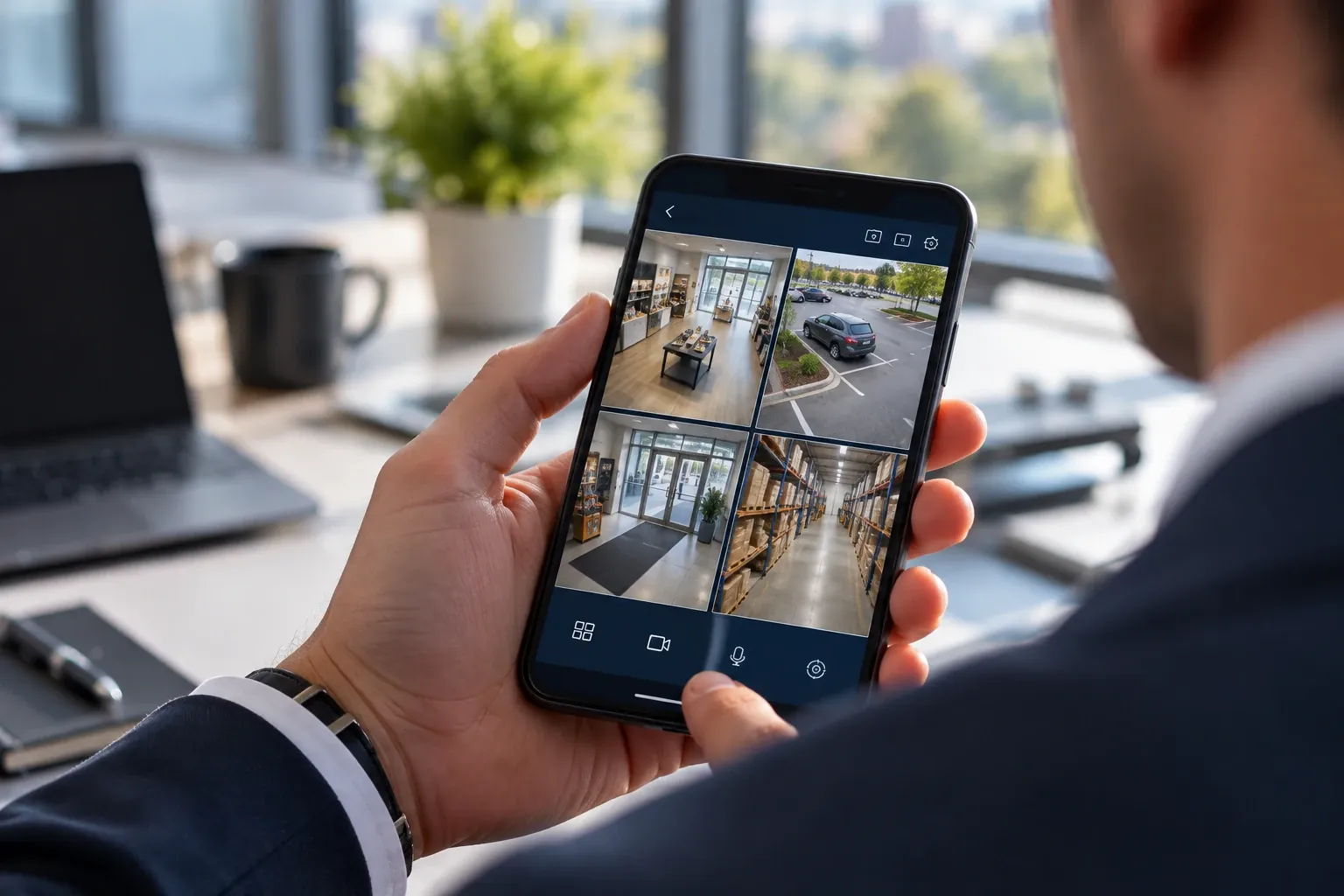
VMS (video management software) is the command layer: view every camera from one interface, configure alerts, search footage by time or zone, and export evidence clips for police or insurers in minutes.
Wireless IP cameras eliminate cable runs in retrofit installations, and PoE (Power over Ethernet) cameras carry power and data on a single cable — cutting installation complexity and cost on new deployments.
Live feeds, playback, and alert history through the FPI mobile app and client portal — from any device, anywhere, across every site you manage.
Most surveillance vendors sell cameras — FPI designs, installs, integrates, and manages the entire system under one accountability umbrella.
No handoff between a camera vendor and a monitoring company. FPI owns the outcome from site assessment to ongoing management — one service agreement, one point of contact, one party accountable when it matters.
Camera type, placement, resolution, and monitoring configuration are designed from your property's vulnerability assessment — not selected from a standard package built for someone else's building.
Certified installation is what separates evidence-grade coverage from decorative cameras: correct placement for identification, housing ratings matched to the environment, and network configuration built for reliability. Credential documentation is available on request.
IP camera networks scale across multiple locations from a single dashboard. The same VMS platform manages one location or fifty — so growth never means starting over with a new vendor.
FPI maintenance plans cover firmware updates, hardware health monitoring, and remote diagnostics — a fixed line item instead of surprise service calls.
The right surveillance system depends on your property type, coverage zones, lighting conditions, budget, and whether you need active monitoring or recorded backup. Use this as a decision tool, not a pitch.
Start with entry and exit points, high-value zones, blind spots identified in the assessment, and anywhere an incident has previously occurred. Over-coverage wastes budget; under-coverage leaves the gaps that incidents find. The count comes from the property — not from a package tier.
Wired: more reliable, higher bandwidth, harder to interfere with. Wireless: faster to deploy and ideal for retrofits, but dependent on network quality. Hybrid systems match the medium to each zone rather than forcing one answer on the whole property.
On-site NVR (network video recorder, for IP cameras) or DVR (digital video recorder, for analog) offers fast retrieval with no monthly fees — but the hardware itself can be stolen or damaged. Cloud storage is redundant and remotely accessible at a subscription cost. FPI's standard: local recording with encrypted cloud sync.
1080p is the minimum for evidence-grade footage at close range. 4K is the recommendation for wide-area coverage where digital zoom must still identify individuals. Resolution decisions are per-zone, not per-system.
As a buying decision: deploying an under-rated camera in a direct-rain or high-dust environment means eventual hardware failure and a silent coverage loss. Match IP66/IP67 ratings to each mounting location's real exposure.
Recording captures evidence. Active monitoring prevents incidents. For high-value properties and overnight coverage, monitoring is the layer that turns a camera system into a prevention system.
FPI conducts no-cost surveillance assessments covering camera placement, resolution requirements, blind spot analysis, and monitoring recommendations — with no obligation, available across Florida and Texas.
Submit your property details and FPI will deliver a site-specific camera layout and system recommendation within 48 hours.
Camera placement, resolution requirements, blind spot analysis, and monitoring recommendations — designed for your site and delivered within 48 hours.