Hospitals and medical facilities face a security environment unlike any other — high patient vulnerability, restricted-area compliance requirements, and the highest rate of workplace violence of any US industry, all within a setting that must remain calm and therapeutic.
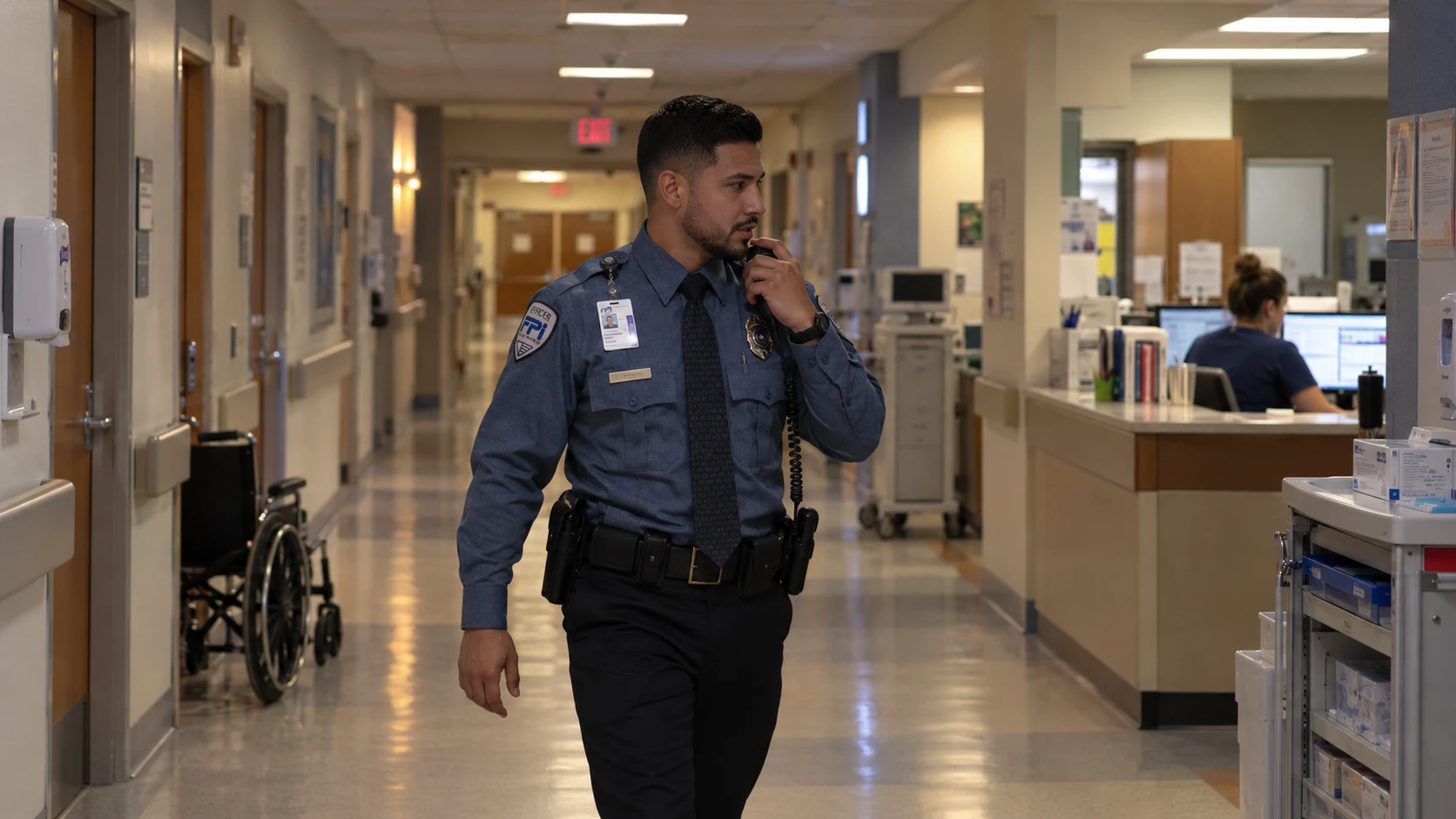
Healthcare workers are five times more likely to experience workplace violence than workers in other industries (Bureau of Labor Statistics, 2023), and 75% of workplace assaults occur in healthcare and social service settings (OSHA, 2023). From patient-on-staff assaults to domestic incidents that follow patients into clinical settings, a guard without de-escalation training in this environment is a liability, not an asset.
HIPAA — the Health Insurance Portability and Accountability Act — requires healthcare facilities to protect patient privacy in access control systems, surveillance camera placement, and incident documentation. A camera aimed at a patient examination area, or an access log that exposes patient movement, can create HIPAA liability. FPI designs all systems to HIPAA standards from the start.
Pharmacy areas, medication storage rooms, and patient records areas require documented credential management — not just a locked door. Every access event must be logged and auditable for regulatory compliance.
Emergency departments run 24/7 under high-stress conditions — the environment most associated with patient-on-staff incidents. After-hours periods with minimal staff create unauthorized-access risk in parking structures, loading docks, and building entry points. Security for hospitals has to cover both the crisis and the quiet 3 AM shift.
FPI provides a complete healthcare security program — from HIPAA-trained hospital security guards and access control for restricted areas to hospital surveillance cameras and after-hours patrol.
FPI healthcare security guards train in HIPAA patient privacy protocols, de-escalation techniques for clinical environments, emergency response procedures, and your facility's specific post orders before day one. Armed options are available for high-risk areas including emergency departments. Explore our security guard services.
FPI deploys HIPAA-compliant access control for pharmacy areas, medication storage, patient records, and restricted clinical zones — keycard, biometric, and mobile credential options, every entry auditable. Explore our access control systems.
FPI's hospital surveillance camera systems cover entrances, emergency department waiting areas, parking structures, and restricted-zone access points — designed with HIPAA patient privacy boundaries in mind. Explore our surveillance systems.
Medical campuses cover large footprints — multiple buildings, parking structures, and outdoor areas. GPS-tracked patrol vehicles cover the full campus perimeter on randomized schedules, with every visit logged and accessible in the client portal. Explore our mobile patrol services.
FPI provides 24/7 remote monitoring in South Florida and beyond. Our SOC watches hospital and clinic camera feeds after hours — detecting unauthorized access, parking structure incidents, and perimeter breaches, with every alert human-verified before response so patient care is never disturbed by a false alarm. Explore our remote video monitoring.
Healthcare facilities choose FPI because a security guard in a clinical environment must be trained differently — and because HIPAA-compliant systems require design expertise, not just hardware installation.
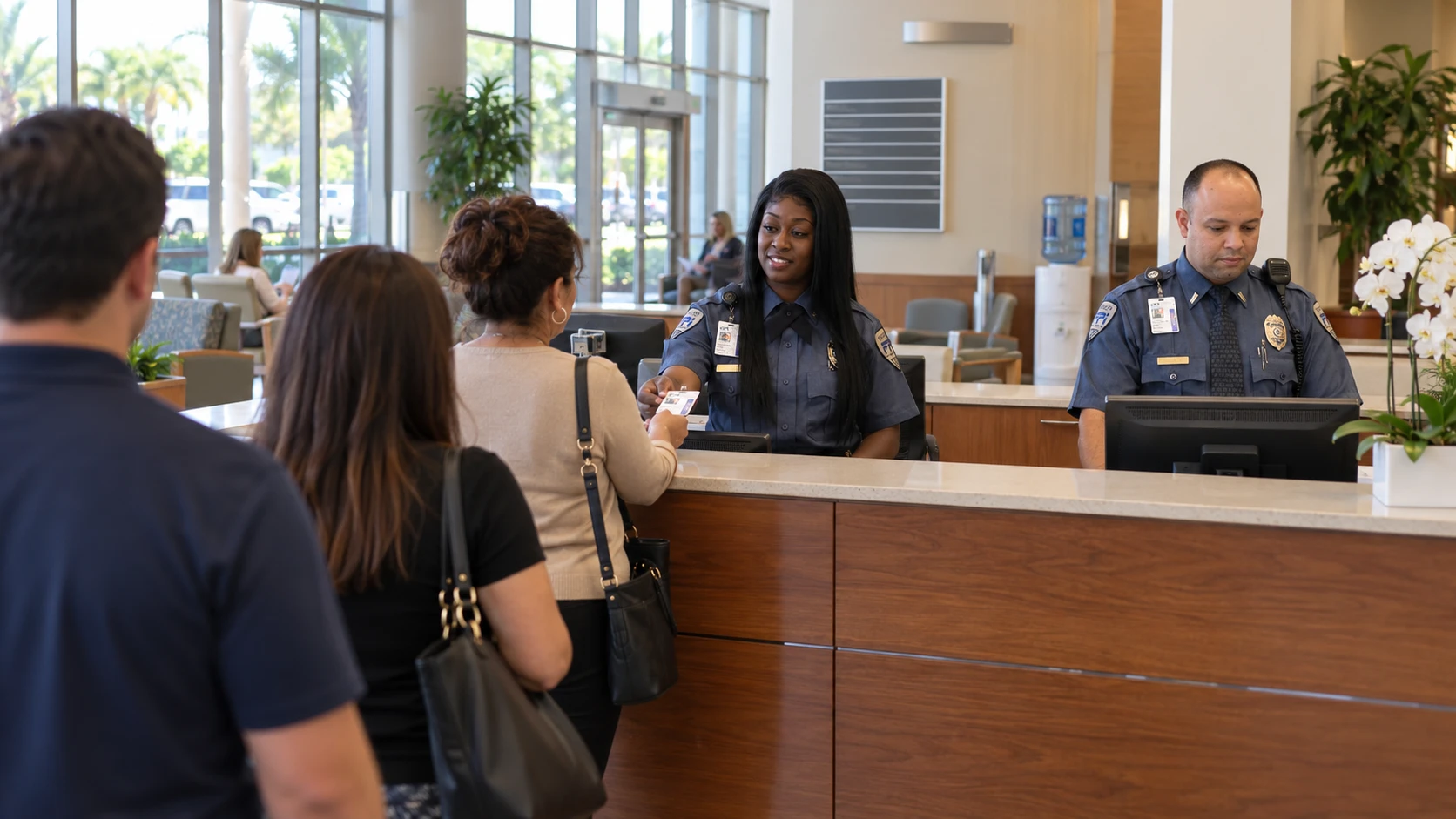
Most security companies deploy the same guard to a warehouse and a hospital. FPI trains healthcare officers separately — de-escalation, HIPAA protocols, emergency response, and facility-specific post orders. The difference shows up in incident outcomes, not just the training file.
FPI's surveillance camera placement, access control configuration, and incident documentation are designed with HIPAA requirements in mind from the start — not retrofitted for compliance after installation. Every system deploys without creating patient privacy liability.
Every access control event, incident report, and patrol log is timestamped in the FPI client portal — exportable for Joint Commission, CMS (Centers for Medicare & Medicaid Services), and state health department audits. Florida businesses without adequate security pay 30–40% more in insurance premiums (TechPro Security, 2025); documentation protects both compliance and cost.
When FPI's SOC detects an anomaly in a hospital camera feed, a live operator verifies before dispatching — no false alarm fatigue in a clinical environment where unnecessary disturbance affects patient care. Active security reduces property crimes 16% (TechPro Security, 2025). Explore our Security Operations Center.
Different healthcare environments carry different security profiles — a trauma center emergency department and a medical office park require entirely different programs.
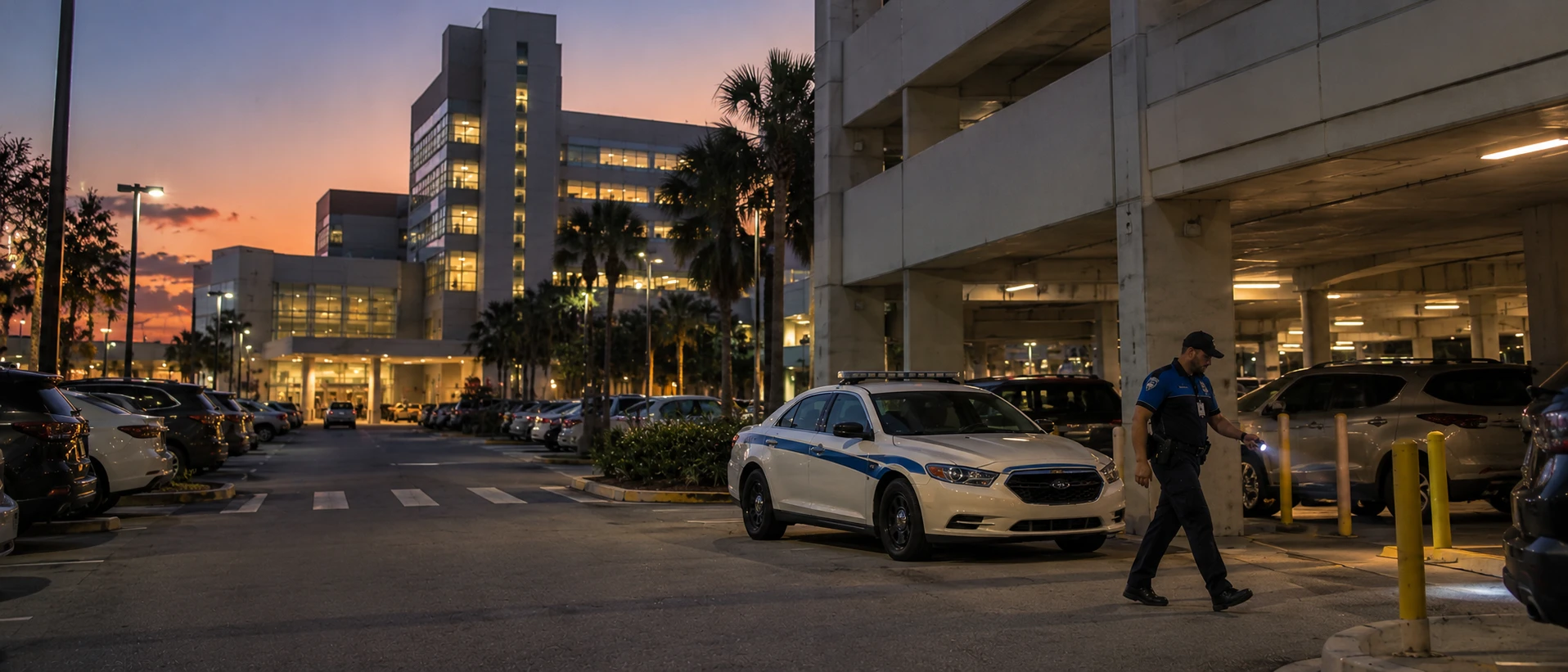
Hospitals require 24/7 guard coverage in emergency departments, lobby security, restricted-area access control, parking structure patrol, and after-hours perimeter monitoring. FPI manages the full hospital security program under one agreement.
Outpatient facilities face high patient volume during business hours, vulnerable patients in waiting areas, and after-hours unauthorized access. FPI provides lobby officers, access control, and after-hours monitoring for ambulatory care facilities.
Multi-tenant medical office buildings need zone-specific access control for each practice, shared lobby management, and parking structure coverage. FPI runs the full medical office building security program under one agreement.
Behavioral health environments require officers with advanced de-escalation training — patient-on-staff incidents are more common and more complex than in general healthcare settings. FPI trains officers specifically for behavioral health before deployment.
FPI installs and manages hospital surveillance cameras and access control systems designed specifically for healthcare environments — HIPAA-compliant placement, AI-assisted detection, and live SOC monitoring after hours.
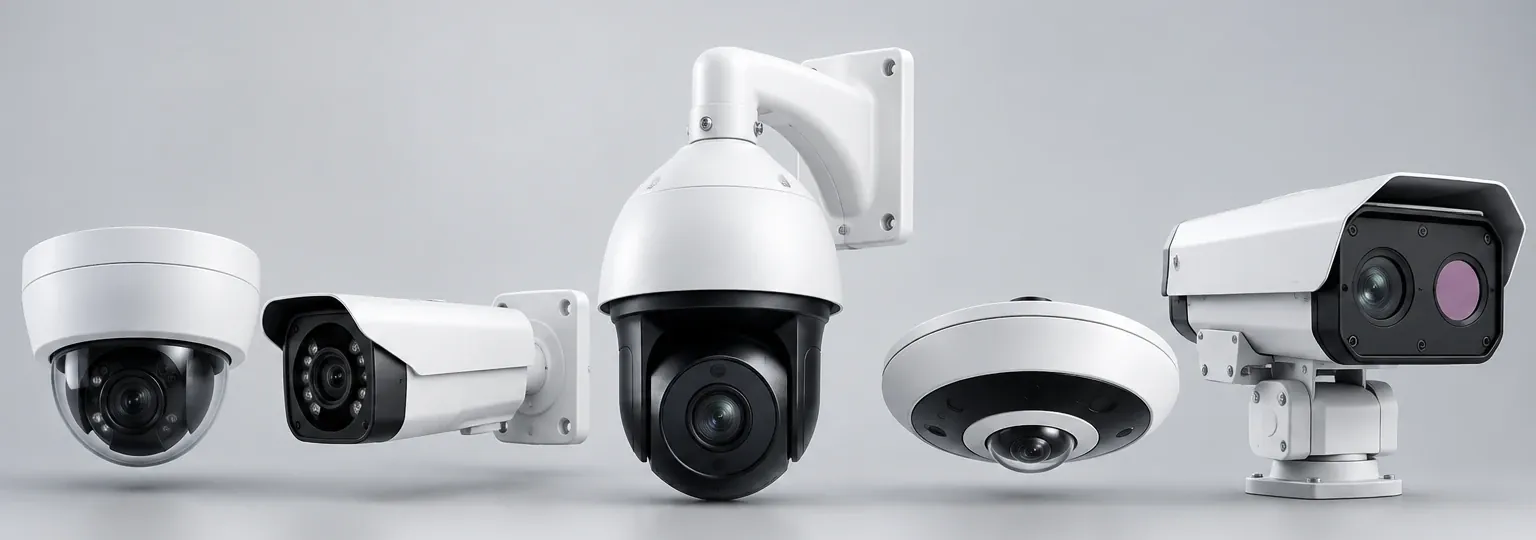
Hospital surveillance cameras cover entrance and exit points, waiting areas, parking structures, and restricted-zone access — designed to avoid patient care areas that would create HIPAA liability. FPI's system design follows HIPAA boundary requirements.
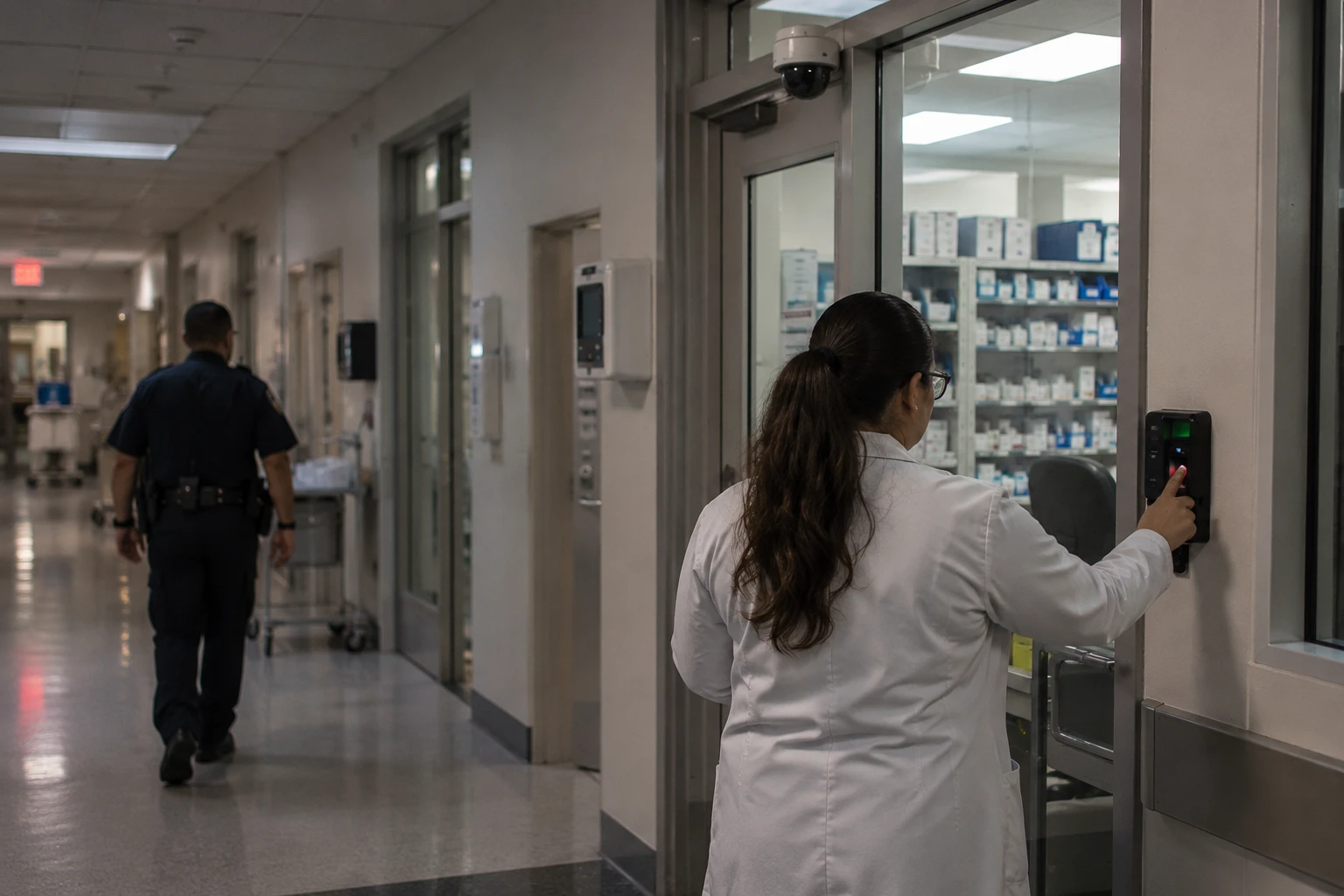
Biometric systems prevent unauthorized entry in sensitive areas. Fingerprint and facial recognition for pharmacy storage, medication rooms, and patient records areas provide the highest security tier with a complete audit trail for regulatory compliance.
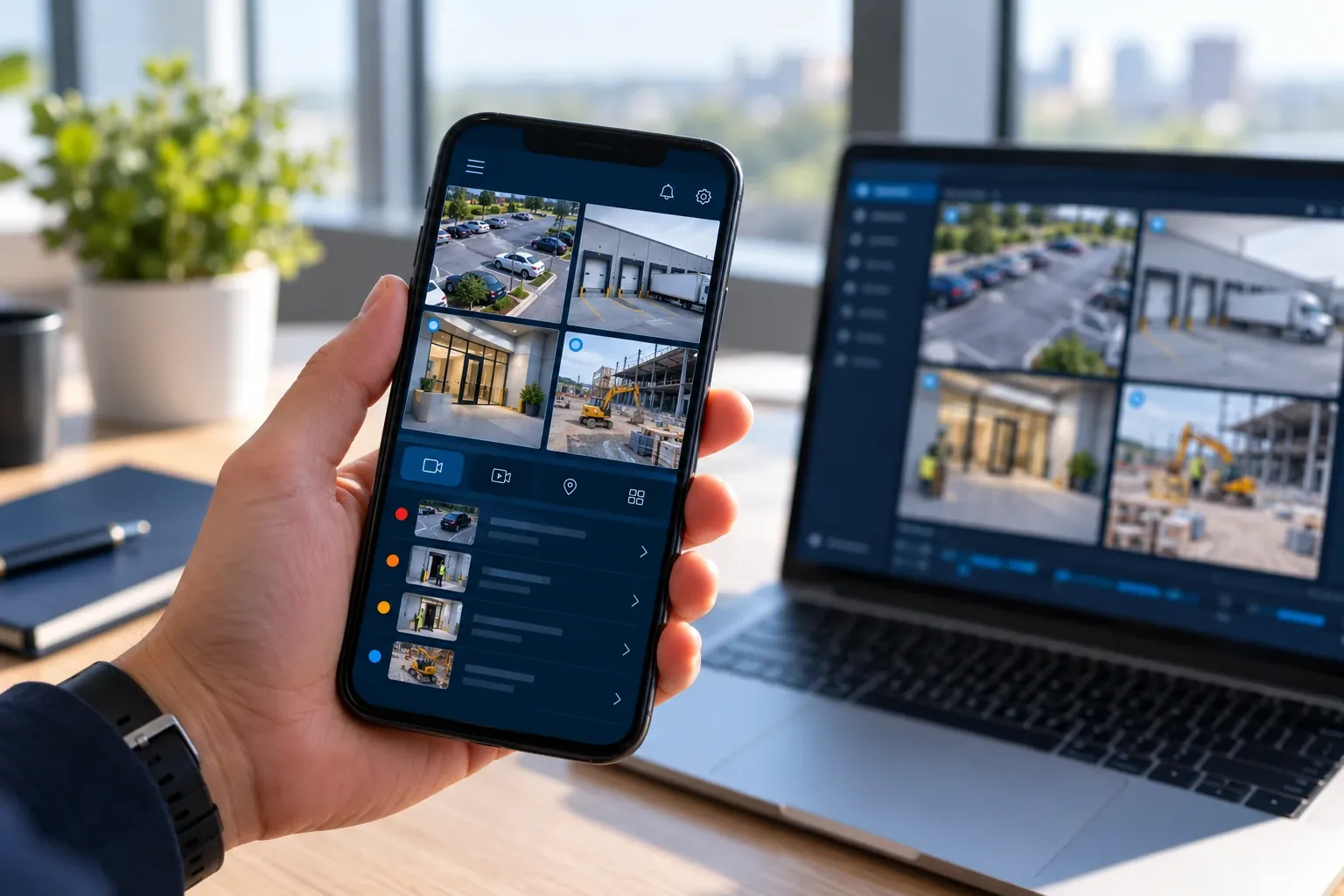
Access control logs, incident reports, patrol records, and camera alert history — accessible from any device, 24/7, and exportable for Joint Commission, CMS, and state health department audits. The Director of Security pulls the last 90 days of access logs before an inspection, no vendor calls needed.
A no-cost assessment for hospitals, clinics, and medical campuses in South Florida and Dallas–Fort Worth, delivered as a written proposal built around your facility's regulatory requirements.