FPI offers mobile patrol security across Florida and Texas — risk-based security patrol services that are GPS-verified on every visit. Our patrols go beyond presence: every round is documented, timestamped, and accountable.
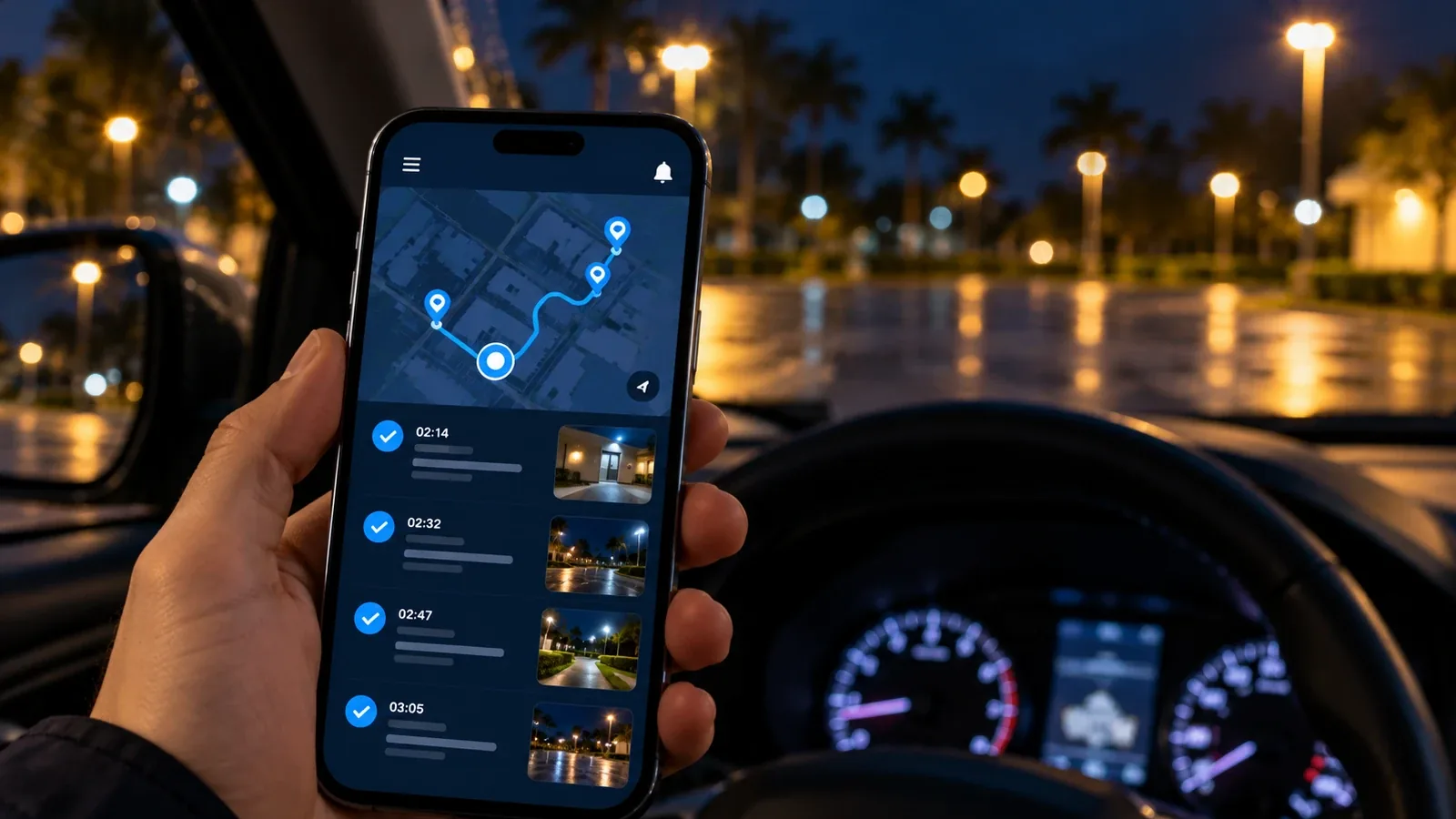
GPS-verified patrol logs are proof of coverage — not just a promise. FPI's patrol model is built around documentation, not assumptions: every visit records the time, location, and duration of each patrol stop, and every record is accessible through the FPI client portal. When a patrol company tells you your property was checked last night, you should not have to take their word for it. With FPI, you can see it.
Predictability is a vulnerability. This is not a pitch against fixed-post security — it is an honest risk analysis of what happens when coverage never changes.
Criminals observe before they act. A guard who walks the same route at the same times, every night, teaches an observer exactly when each zone is unwatched. Over days or weeks, fixed patterns become a map of your property's gaps. Randomized patrol routes remove that map — when visit timing cannot be predicted, planning around it becomes impractical.
After business hours, perimeter blind spots and secondary access points go unwatched entirely on many properties. Rear doors, loading areas, fence lines, and far corners of parking lots sit outside camera coverage and beyond the reach of a fixed post. These are the zones where trespassing, theft, and vandalism concentrate once static coverage ends for the day.
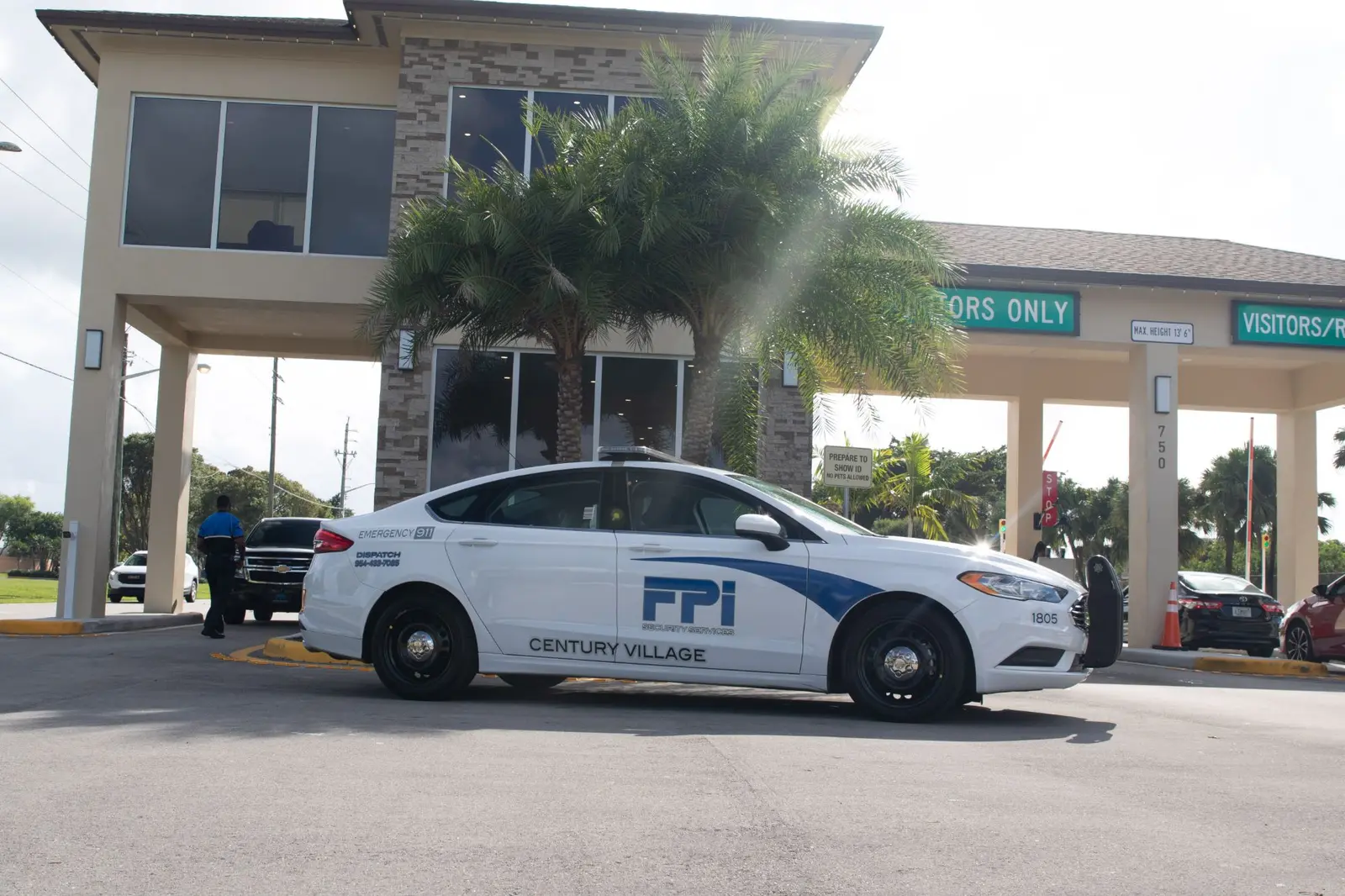
A marked patrol vehicle circulating a property signals one thing to a potential bad actor: someone is actively watching, and their next pass cannot be timed. Patrol visits deter trespassing on commercial premises precisely because the presence moves — deterrence follows the vehicle across every zone it covers.
Mobile patrol fits large areas, after-hours windows, and multi-site portfolios where a fixed post cannot justify its cost. An on-site guard fits high-risk locations, client-facing posts, and 24/7 fixed coverage. Many FPI clients combine both. If you are weighing a dedicated officer, see our security guard services.
Mobile patrol security is a vehicle-based service in which trained officers follow planned routes to inspect, deter, and document security conditions across a property. Security patrol officers inspect properties during scheduled visits — checking access points, sweeping perimeters, and recording what they find.
Mobile patrol delivers coverage across zones through randomized visits at a lower cost per hour. An on-site guard holds a fixed post with constant presence and the strongest deterrence at a single point. The right choice depends on whether your risk is concentrated in one location or spread across a property.
Vehicle patrol security is typically the better fit for large campuses, properties with multiple access points, budget-constrained after-hours coverage, active construction sites, and vacant properties awaiting sale or development. In each case, the ground to cover is too large for a fixed post to protect.
Mobile patrol officers follow randomized routes to prevent predictability. Unpredictable visit timing removes the ability for bad actors to plan around a schedule — there is no reliable window in which the property is guaranteed to be unwatched, so the risk calculation changes on every approach.
FPI's security and patrol services cover marked vehicle patrols, overnight rounds, alarm response, perimeter checks, access point inspections, parking enforcement, and documented incident reporting.
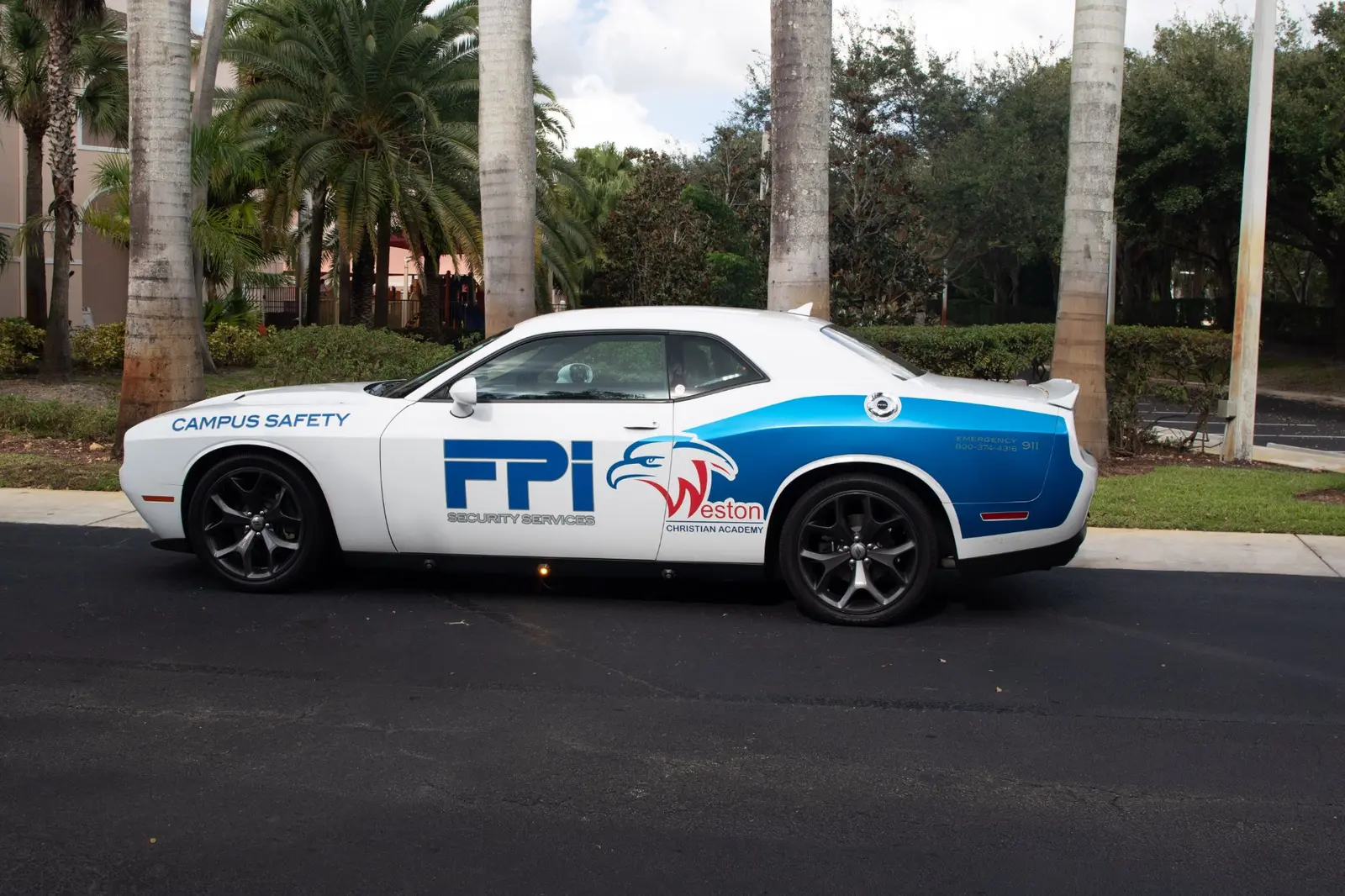
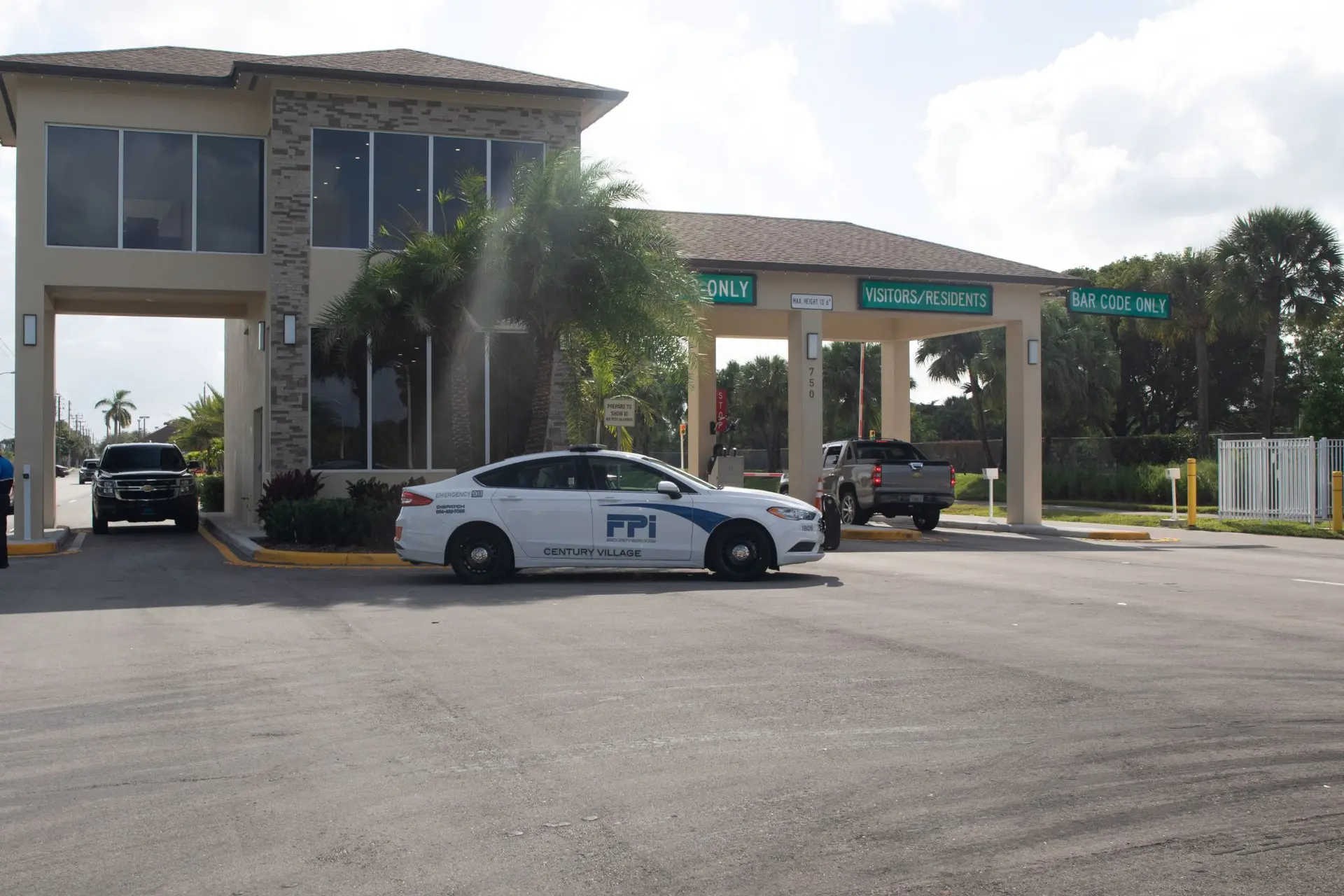
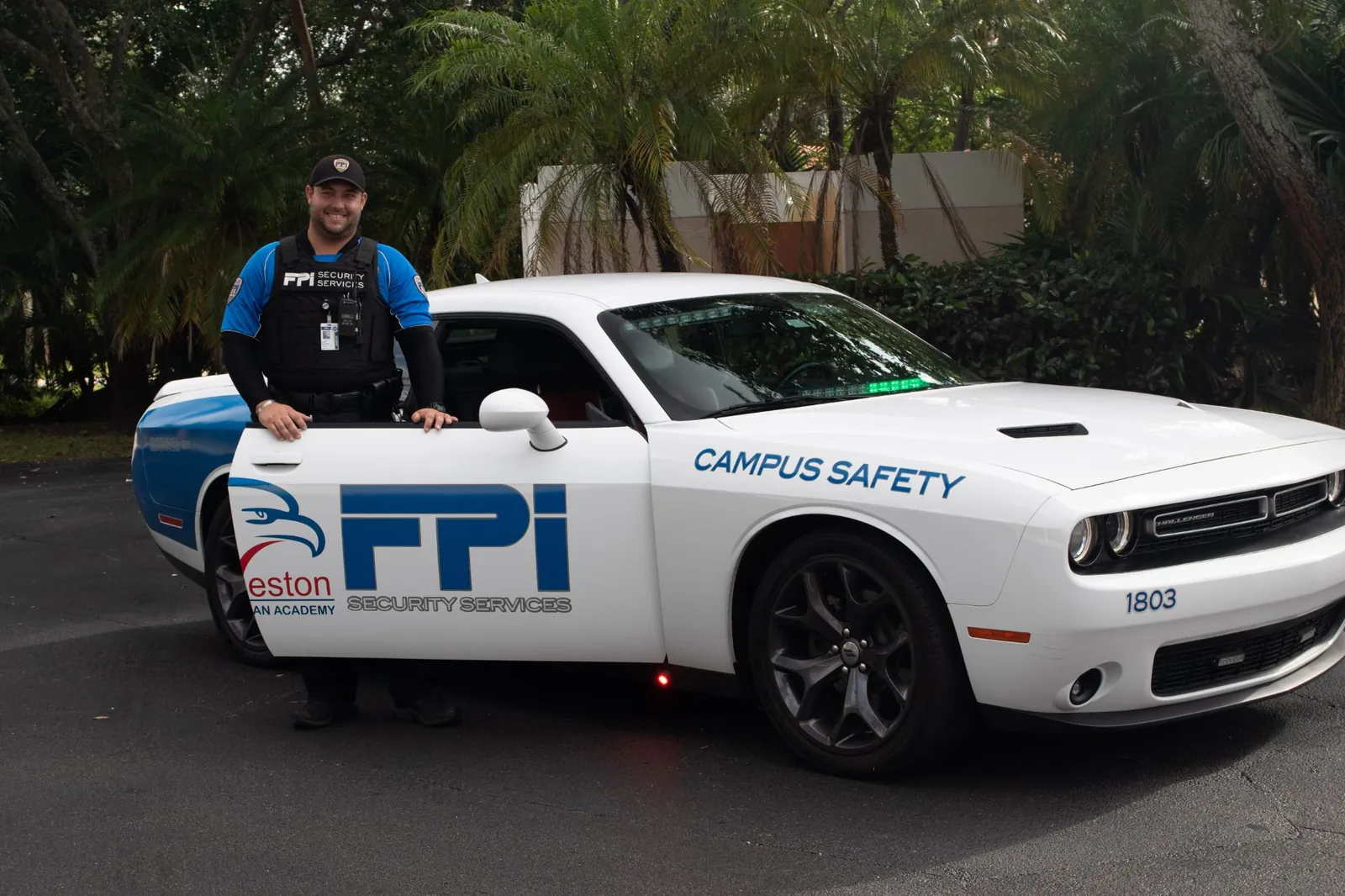
Branded, marked patrol vehicles create visible deterrence the moment they enter the property. FPI deploys vehicle patrol security across our service areas, with officers patrolling both interior zones and exterior grounds on every visit.
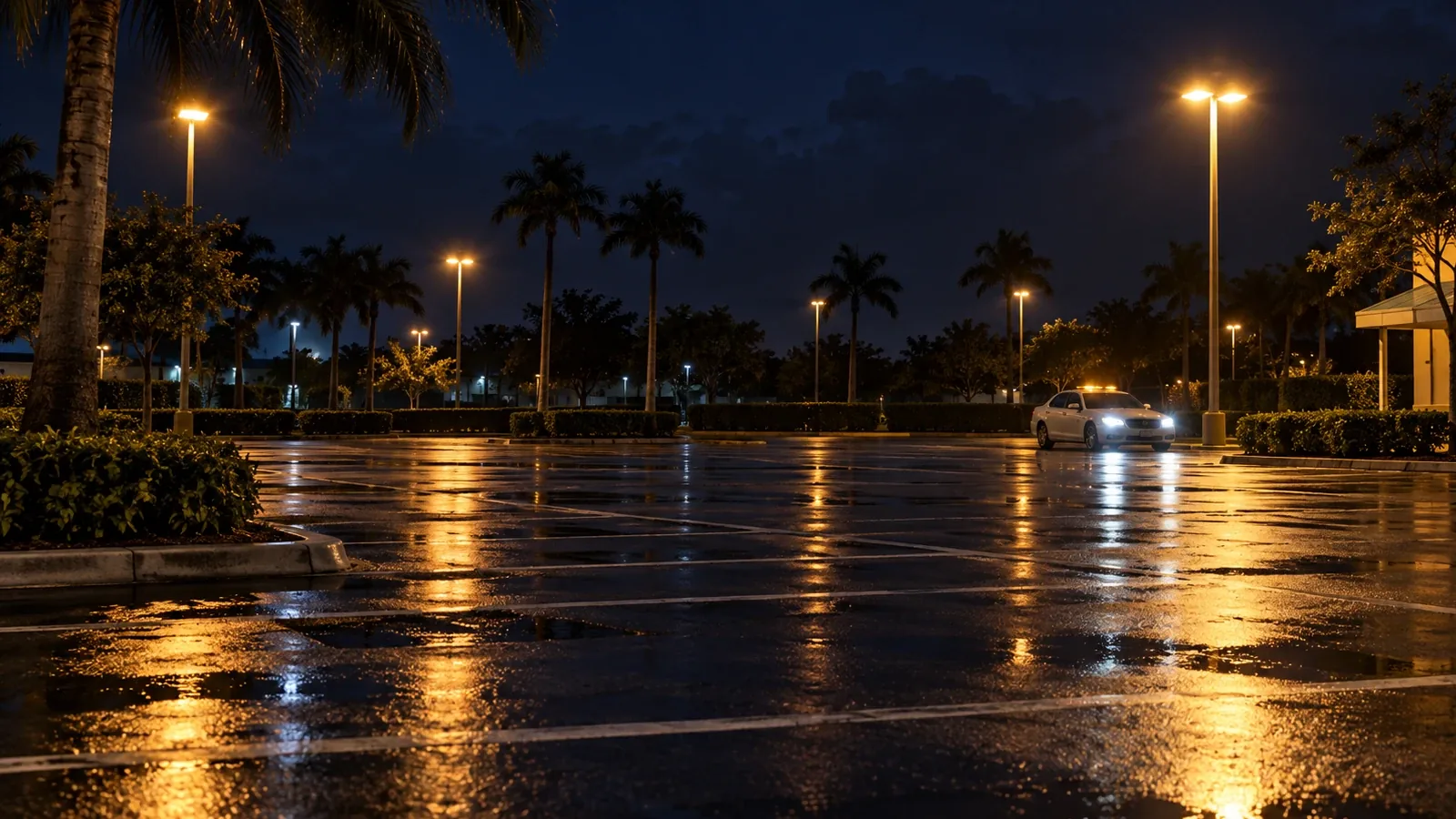
FPI provides overnight security patrols for high-risk hours — the window when most property crime occurs. Overnight rounds use randomized timing within scheduled windows, so no two nights follow the same pattern.
Patrol officers respond on-site to alarm activations and verify threats in person. That eliminates false alarm fatigue — instead of guessing whether an activation was wind or an intruder, you get an officer's verified report, and real threats get an immediate response.
Every patrol includes a systematic perimeter sweep: fencing, gates, exterior doors, lighting, and vulnerable access points are inspected and their condition documented. Perimeter issues get flagged before they become entry points.
Each visit verifies that every entry point is secured. Results are logged with a timestamp and officer ID — so an unlocked door is a documented finding with a name and a time attached, not a surprise discovered the next morning.
Officers monitor for unauthorized vehicles, enforce parking rules where required, and report suspicious activity in real time. Parking enforcement reduces vehicle-related incidents in lots and keeps fire lanes and reserved areas clear.
Every patrol visit generates a timestamped, photo-documented report accessible through the FPI client portal. Patrol officers document security conditions after each visit — this is the proof-of-coverage layer a basic patrol company does not provide, and it is standard on every FPI patrol program.
Vehicle patrol covers more ground at a lower cost per hour than a fixed security post. For many properties, that makes it the practical business decision — not a downgrade.
One patrol officer in a vehicle can cover a multi-acre property that would otherwise require three or four static posts. Mobile patrol units cover multiple locations per shift, reaching zones a fixed guard would never see from their post.
A full-time overnight guard means paying for eight hours of presence whether the risk justifies it or not. Scheduled patrol visits concentrate spending on the checks that matter — for lower-risk overnight periods, patrol is the smarter budget allocation, delivering verified coverage without a full-shift cost.
A mobile officer already on or near the property can respond within minutes — reaching the far side of a large site faster than waiting on external emergency services to arrive, assess, and act.
Patrols are scheduled around actual risk windows: late nights, weekends, holidays, and active construction phases. You are not locked into a 24/7 fixed post when your exposure is concentrated in specific hours.
A marked patrol vehicle actively circulating a property is a moving signal of active security. Active security programs reduce property crimes by 16% compared to gate-only setups (TechPro Security, 2025).
FPI designs patrol programs around the actual risk profile, layout, and high-risk hours of each property type — from construction sites to residential communities.
Active sites hold exposed equipment and materials that disappear on nights and weekends. FPI patrols verify perimeter integrity, prevent unauthorized access, and document contractor equipment left in the open — with overnight and weekend rounds concentrated on the hours your site sits empty.
After-hours exterior patrols cover parking lots, entrances, and access points across the campus. Beyond deterrence, documented patrol activity gives property managers the tenant-safety and liability documentation their ownership groups and insurers expect.
California, Florida, and Texas account for 54% of all U.S. cargo theft (NICB, 2025) — and FPI patrols in Florida and Texas. Patrol programs for industrial facilities focus on perimeter integrity, access point monitoring, and overnight coverage when high-value inventory is most exposed.
A visible patrol presence serves gated and non-gated communities alike: resident peace of mind, visitor monitoring, and after-hours deterrence. The investment shows up in property value too — homes in gated communities with active security sell for an average of $30,000 more (TechPro Security, 2025).
After-hours lot patrols monitor for suspicious vehicles, check storefront doors and service entrances, and sweep the perimeter. Parking enforcement integrates directly into the patrol program, keeping lots orderly during business hours and watched after close.
FPI patrol officers can serve multiple vacant or low-occupancy properties per shift — cost-effective verified coverage across an entire portfolio. FPI conducts patrol visits across commercial districts and residential neighborhoods in every state we serve.
FPI doesn't start with a vehicle — we start with your risk. Every patrol program follows a systematic five-step process.
FPI conducts a no-cost on-site assessment to identify access points, blind spots, high-risk zones, and optimal patrol routes. The assessment produces a vulnerability map — the foundation the entire program is built on.
Routes and visit frequency are designed around actual risk data, not a standard template. High-risk zones get higher frequency; low-risk zones get efficient coverage. Randomization windows are built in from day one.
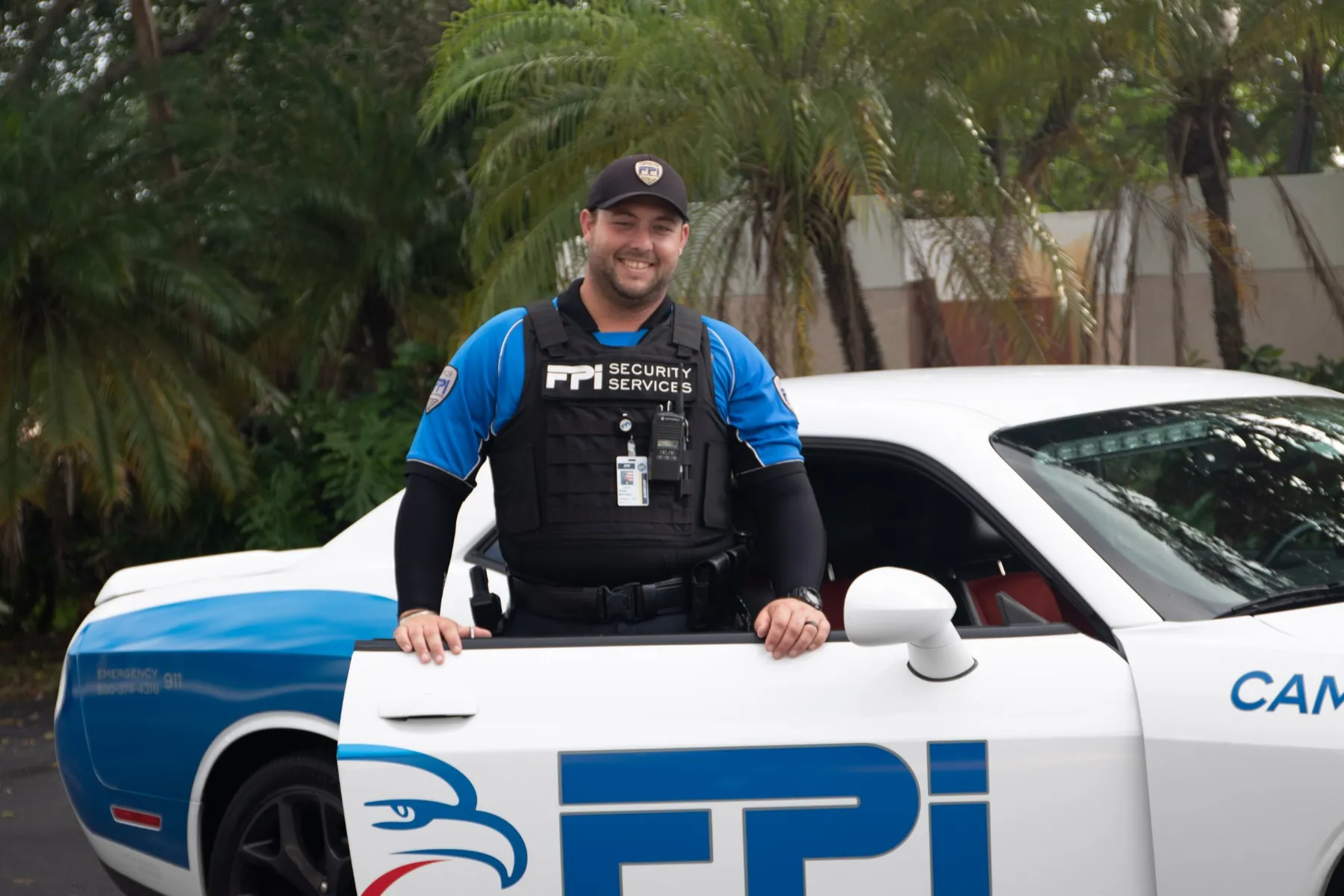
Trained, background-checked patrol officers are assigned to your property with a dedicated marked vehicle — briefed on your site's layout, protocols, and escalation contacts before the first round runs.
Every patrol is GPS-tracked in real time, and each visit generates a timestamped incident report in the FPI client portal. This is documented accountability — verifiable data, not a verbal assurance that the rounds happened.
FPI reviews patrol data monthly and adjusts routes, timing, and frequency based on incident patterns and client feedback. Your patrol program is not static — it improves with every month of data.
Most patrol companies send a vehicle. FPI builds a verified, adaptive patrol program.
GPS logs confirm the time, location, and duration of every patrol stop, accessible any time through the client portal. When you ask "how do I know the patrol actually happened?" — this is the answer: GPS-verified patrol logs provide documented proof of every site visit.
FPI patrol officers are trained in de-escalation, incident response, and your site-specific procedures. They are security professionals operating a patrol route — not drivers assigned to circle a parking lot.
FPI dispatch operates around the clock. Officers can be redirected, reinforced, or escalated in response to real-time conditions — an alarm activation, a client call, or a suspicious activity report from another site.
Clients access patrol logs, incident reports, and GPS history through FPI's proprietary portal — no chasing down reports, no waiting until Monday. What our officers documented overnight is on your screen in the morning.
FPI can deploy patrol services quickly after the initial assessment, with flexible contract options for permanent, seasonal, or project-based coverage. Starting a patrol program should be a low-friction decision — ours is.
Most property crime concentrates late at night — and those hours require a different patrol strategy, not a scaled-down version of daytime coverage.
The risk window is consistent across property types: after business hours, on weekends, and during holidays — when staff are gone, traffic drops, and visibility is low. Cargo theft losses alone rose 60% in 2025 to $725 million (NICB, 2025), driven overwhelmingly by after-hours incidents.
In these windows, staffing drops, emergency response times stretch, and natural surveillance from passersby disappears. Patrol frequency and randomization matter more precisely when no one else is watching the property.
Predictable routines are vulnerabilities — a patrol that arrives at midnight and 3 AM every night is a schedule an observer can work around. FPI's overnight scheduling ensures no two nights follow the same pattern.
Overnight patrol programs target the incidents that cluster after dark: unauthorized access, vandalism, trespassing, vehicle theft, equipment theft from construction sites, and parking lot incidents.
If any of these apply to your property, a patrol program is worth evaluating.
One incident signals a vulnerability that has already been found. A visible patrol presence changes the risk calculation for would-be offenders before the second incident happens.
Repeated false alarms without on-site verification drain resources and desensitize everyone who responds to them. Patrol officers verify activations in person, so a real alarm never gets dismissed as another false one.
Properties with wide footprints and minimal staff cannot self-monitor. Mobile patrol fills that gap without the cost of multiple static posts.
Every additional entry and exit point is another potential vulnerability. Patrol officers systematically check each one on every visit — and log the result.
Incidents during unmanned hours create liability exposure, and Florida businesses without adequate security pay 30–40% higher insurance premiums (TechPro Security, 2025). Documented patrol activity is evidence of due diligence — a real consideration for insurance and legal purposes.
Choosing a patrol provider is a risk decision, not just a price decision. Use these five criteria as an objective evaluation guide.
Every patrol officer should be licensed under their state's private security regulations — Chapter 493 in Florida, and the equivalent licensing authority in Texas. Then ask about training standards beyond the license: de-escalation, incident response, and site-specific procedures.
Ask whether you receive patrol logs, timestamps, GPS data, and incident reports — or just a monthly summary. Transparency is the baseline; a provider who cannot show you their coverage is asking you to take it on faith.
What happens when an officer identifies a threat? Understand the escalation procedure, alarm response capability, and how dispatch communicates with you in real time before you sign anything.
A modern patrol provider runs GPS tracking, digital reporting, and a client-accessible portal. Paper logs and verbal reports are not acceptable standards in 2026.
A provider who patrols warehouses and construction sites operates differently from one who covers HOA communities. Verify relevant experience in your property type — and in your market.
FPI patrol programs start with a free property assessment — access points, blind spots, and high-risk hours mapped before a single route is designed.